
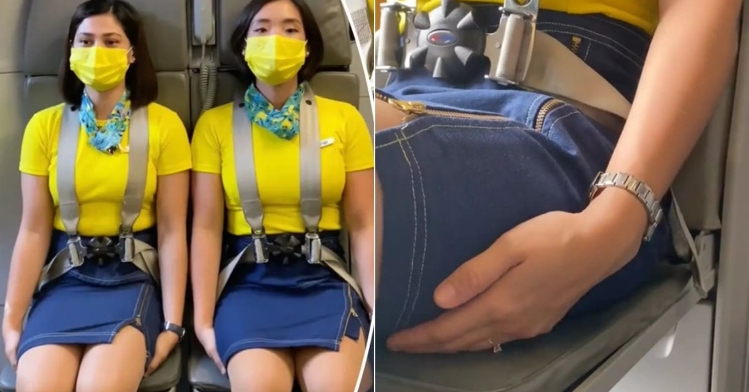
Many air travellers notice small details during a flight, but one action often surprises passengers. Just before takeoff and landing, flight attendants sit in their jump seats with their hands placed under their thighs. At first glance, it may seem unusual, but this is actually an important part of airline safety procedures.
This position is not about comfort. It is a trained safety technique that helps cabin crew stay prepared during the two most critical stages of a flight.
Why Takeoff and Landing Are the Most Critical Phases
According to aviation experts, most flight incidents happen during takeoff or landing rather than while the aircraft is cruising at high altitude.
During these phases, the aircraft is changing speed, altitude, and direction. Because of this, cabin crew must remain fully alert and ready to respond immediately if an unexpected situation occurs.
That is why airlines follow strict procedures before every takeoff and landing.
What Is the ‘Brace Position’?
The posture used by flight attendants is known as the brace position.
In this position, they:
Keep Their Hands Under Their Thighs
Their palms are placed beneath their thighs, usually facing upward. This prevents unnecessary hand movement if the aircraft suddenly stops or experiences strong turbulence.
Sit Upright
Their back remains straight against the jump seat, with their feet placed firmly on the floor.
Fasten the Seat Belt Securely
The safety harness keeps them firmly in place while allowing them to react quickly if needed.
This position reduces the risk of injury during sudden movements.
How This Position Helps During Emergencies
The brace position has several important benefits.
Reduces Body Movement
If there is sudden braking, turbulence, or an emergency landing, the position keeps the body stable.
Less movement means a lower chance of injuries.
Protects Arms and Hands
By keeping their hands secured, flight attendants reduce the possibility of their arms being thrown forward during impact.
Keeps Them Ready to Act
Once the aircraft comes to a stop, they can immediately begin emergency procedures without recovering from unnecessary movement.
Every second is important during an emergency.
The Silent Review: A Mental Safety Checklist
While sitting in the brace position, flight attendants are not simply waiting.
They perform what is known as a silent review.
This is a mental checklist where they quickly review emergency procedures before takeoff and landing.
What Do Flight Attendants Think About During a Silent Review?
Each airline has its own procedures, but flight attendants commonly remind themselves about:
Emergency Exit Operation
They mentally review how to open the nearest emergency exit if evacuation becomes necessary.
Safety Equipment Location
They remember where important safety equipment is stored, including:
- Fire extinguishers
- First aid kits
- Emergency flashlights
- Oxygen equipment
- Life jackets
Emergency Commands
They prepare the commands they would use to guide passengers during an evacuation.
Practising these commands mentally helps them react without hesitation.
Passenger Safety Is Their First Responsibility
Many people think flight attendants are mainly responsible for serving meals and drinks.
In reality, their primary duty is passenger safety.
Every cabin crew member receives extensive training in:
- Emergency evacuations
- Firefighting
- First aid
- CPR
- Aircraft safety
- Security procedures
- Handling medical emergencies
Food and beverage service is only one part of their job.
Why Passengers Should Also Stay Alert
Airlines ask passengers to:
- Fasten seat belts
- Keep tray tables closed
- Return seats to the upright position
- Switch electronic devices to flight mode
- Follow crew instructions
These simple actions help improve safety for everyone on board.
Interesting Aviation Safety Facts
Here are some lesser-known facts about airline safety:
Cabin Crew Count Passengers
Before departure, flight attendants carefully count passengers to ensure everyone is accounted for.
They Watch Passengers During Safety Demonstrations
Crew members observe passengers to identify anyone who may require additional assistance during an emergency.
They Inspect Emergency Equipment Before Every Flight
Safety equipment is checked before passengers board to ensure everything works properly.
Why This Training Matters
Commercial aviation remains one of the safest forms of transportation because airlines prepare for every possible situation.
Even if emergencies rarely happen, flight attendants continuously train so they can respond quickly and confidently whenever needed.
Their calm appearance often hides years of professional safety training.
Conclusion
The next time you fly, you may notice flight attendants sitting with their hands under their thighs during takeoff and landing. This is not a habit or a sign of relaxation. It is a carefully practised safety technique known as the brace position, combined with a silent mental review of emergency procedures.
It reflects the professionalism of cabin crew and their commitment to keeping passengers safe throughout the journey.
FAQs
Why do flight attendants sit on their hands?
They use a trained brace position that helps stabilise their bodies and reduces the risk of injury during sudden movements or emergencies.
What is a silent review?
A silent review is a mental checklist where flight attendants quickly remember emergency procedures before takeoff and landing.
Is the brace position required by airlines?
Most airlines train cabin crew to use a brace position during critical flight phases, although slight variations may exist between airlines.
Are takeoff and landing the most dangerous parts of a flight?
They are considered the most critical phases because most aviation incidents occur during these stages.
What is the main responsibility of flight attendants?
Their primary responsibility is passenger safety, including handling emergencies, evacuations, medical situations, and security incidents.