
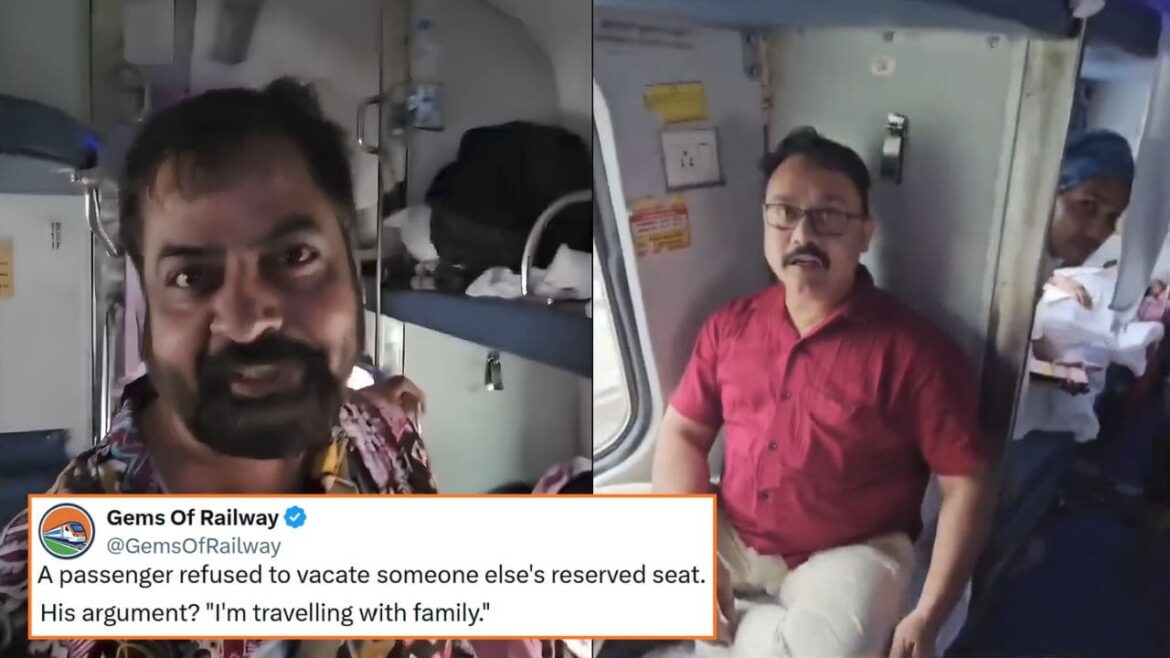
A fresh debate has started on social media after a video from an Indian train showed a disagreement over a reserved seat. The incident became viral when a passenger reportedly refused to leave a reserved berth, saying that he wanted to sit with his family. After the video gained attention, Indian Railways responded and asked for the travel details to investigate the matter.
The incident has once again raised an important question: should passengers always respect reserved seats, or should people be expected to adjust for families during train journeys?
A Viral Video Starts A New Discussion
A video shared on social media showed an argument between two passengers over a reserved seat. According to the post, the person occupying the seat refused to move even after the ticket holder requested him to vacate it.
The passenger reportedly explained that he was travelling with his family and wanted everyone to sit together. However, the traveller with the confirmed reservation did not agree, leading to a heated discussion.
Within a short time, the clip was widely shared across different social media platforms, where thousands of users gave their opinions.
Why Reserved Seats Matter
Indian Railways carries millions of passengers every day. Since trains are often crowded, reserved seats help ensure that passengers get the accommodation they have paid for.
A passenger refused to vacate someone else’s reserved seat.
His argument?
“I’m travelling with family.”
The actual seat holder disagreed.
Should families be allowed to adjust seats for convenience?
Or should reserved seats be respected no matter what?
Because if everyone… pic.twitter.com/CHD4ONcIcQ
— Gems Of Railway (@GemsOfRailway) June 14, 2026
Most travellers understand that families sometimes request seat exchanges. In many cases, people willingly agree if it is convenient. However, problems arise when someone occupies another passenger’s reserved seat without permission.
Many users online pointed out that reservations lose their meaning if passengers start making their own rules.
Railways React To The Viral Complaint
As the discussion continued online, the official Railway Seva account noticed the complaint.
The railway team requested the passenger to provide travel details such as the PNR number and contact information. They also advised using the RailMadad portal or calling Railway Helpline 139 to register complaints for faster action.
This response was appreciated by many users, who said that reporting such issues through official channels is the best way to resolve disputes.
Internet Shares Mixed Opinions
The incident divided social media users.
Many Supported The Reserved Ticket Holder
Several users said that a confirmed reservation should always be respected. They argued that passengers pay extra to reserve seats and should not be forced to compromise because of someone else’s travel plans.
Many also said that occupying another person’s berth without permission creates unnecessary stress during long journeys.
Some Felt Families Should Be Helped
A smaller group of users believed that passengers should help families when possible, especially if children or elderly people are travelling together.
However, they also agreed that any adjustment should happen only after both passengers willingly agree.
Adjustment Should Be A Choice, Not A Rule
Travelling with family can sometimes make seating arrangements difficult. Still, experts and frequent travellers believe that requesting a seat exchange politely is acceptable, but forcing someone to give up their reserved seat is not.
Simple communication and mutual respect usually help solve such situations without arguments.
What Railway Rules Say
Passengers holding confirmed reservations have the right to occupy the seat mentioned on their ticket.
If another passenger refuses to vacate the berth, travellers can seek help from:
- Travelling Ticket Examiner (TTE)
- Railway Protection Force (RPF)
- RailMadad complaint portal
- Railway Helpline 139
These services are available to help passengers resolve travel-related problems quickly.
Social Media Continues To Influence Railway Action
This incident also highlights how social media has become an important platform for passengers to report problems.
Many complaints regarding cleanliness, safety, food quality, and seat disputes now receive faster attention after they go viral online. However, railway officials still encourage passengers to register complaints through official channels so action can be taken immediately.
Conclusion
The viral reserved seat dispute has reminded passengers about the importance of respecting railway reservation rules. While helping families is a kind gesture, it should always happen through mutual agreement rather than pressure.
Indian Railways’ quick response also shows that authorities are paying close attention to passenger complaints shared online. As train travel continues to grow, following reservation rules and showing respect for fellow passengers will help create a safer and more comfortable journey for everyone.
FAQs
Why did the train seat dispute become viral?
The video became popular after a passenger reportedly refused to vacate another traveller’s reserved seat, saying he wanted to stay with his family.
How did Indian Railways respond?
Railway Seva asked the complainant to share travel details and advised reporting the issue through RailMadad or the 139 helpline.
Can passengers occupy someone else’s reserved seat?
No. A reserved seat belongs to the passenger whose ticket confirms that berth unless both passengers agree to exchange seats.
What should passengers do if someone refuses to vacate their reserved seat?
Passengers should immediately contact the TTE, RPF, use the RailMadad portal, or call Railway Helpline 139 for assistance.
Can families request seat adjustments?
Yes. Families can politely request seat exchanges, but other passengers are not legally required to give up their reserved seats. Any adjustment should happen only with mutual consent.