
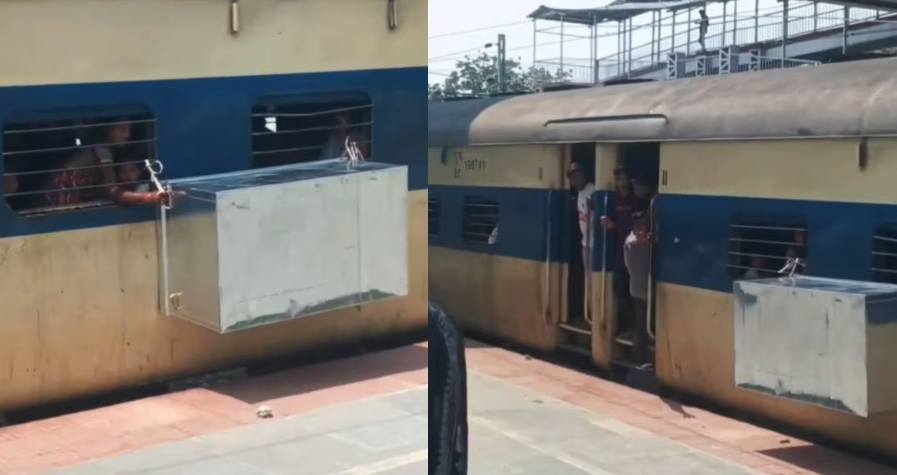
A shocking video from Bihar has started a huge discussion online after people noticed a large metal trunk hanging partly outside a moving train. The unusual scene quickly spread across social media and raised serious questions about railway safety and passenger responsibility.
Many users called the incident dangerous and asked how such a situation was allowed during travel.
What Happened In The Viral Video?
The viral clip reportedly showed a passenger coach carrying an oversized metal trunk.
Since the trunk appeared too large to fit properly inside the compartment, a portion of it remained outside the train window while passengers inside seemed to support it manually.
The video immediately caught attention because even a small movement could have created a dangerous situation.
Why The Incident Worried So Many People
Risk To Passengers And Public Safety
Experts and social media users pointed out multiple possible risks.
If the trunk had slipped, it could have:
- Fallen onto railway tracks
- Hit railway equipment
- Injured people standing near stations
- Created emergency situations for passengers
Train movement includes vibration, braking, and sudden speed changes, which make unsecured objects risky.
How Indian Railways Reacted
Authorities Asked For More Information
After the video became viral, Indian Railways reportedly acknowledged the matter and encouraged people to report such incidents through official complaint platforms.
Passengers were advised to use railway complaint services and helplines whenever they notice safety violations.
Railway officials also reminded passengers to follow luggage rules for safer travel.
Railway Rules About Carrying Large Luggage
Not Every Item Can Be Carried Inside Coaches
Indian Railways allows passengers to travel with personal baggage, but there are limits.
Large or heavy items are generally expected to be transported through parcel services instead of passenger compartments.
These rules exist to avoid inconvenience and reduce safety risks.
Many people ignore these guidelines for convenience, but incidents like this show why such rules matter.
Social Media Reacts Strongly
Internet Divided Between Criticism And Concern
People online reacted in different ways.
Some blamed passengers for ignoring rules.
Others questioned whether awareness about baggage rules is still low in many areas.
Many users also appreciated that the railway department noticed the issue and responded.
The Bigger Question: Convenience Or Safety?
India’s railway network carries millions of passengers every day.
Sometimes people carry oversized luggage because parcel booking feels difficult or time-consuming.
However, convenience should not come before safety.
Small mistakes during train travel can create bigger problems than expected.
Can Such Incidents Be Prevented?
Simple Changes May Help
Experts suggest:
- Better luggage checks at stations
- More awareness campaigns
- Easier parcel booking services
- Clear announcements about baggage rules
Passenger cooperation is equally important.
Conclusion
The viral Bihar train video became more than just an internet moment. It reminded everyone that railway safety depends on both authorities and passengers. Carrying oversized luggage inside moving trains may look manageable for a few minutes, but it can quickly turn dangerous. Following baggage rules and reporting unsafe behaviour can help make train travel safer for everyone.
FAQs
What was shown in the viral Bihar train video?
The video showed a large metal trunk hanging partly outside a moving train compartment.
Did Indian Railways respond?
Yes, railway authorities reportedly took note and encouraged reporting through official complaint channels.
Are oversized items allowed inside train coaches?
Passengers can carry luggage, but very large items are usually expected to be booked separately.
Why was the incident considered dangerous?
The trunk could have slipped, caused injuries, or damaged railway infrastructure.
How can passengers report railway issues?
Passengers can use official railway complaint services and railway support platforms.