
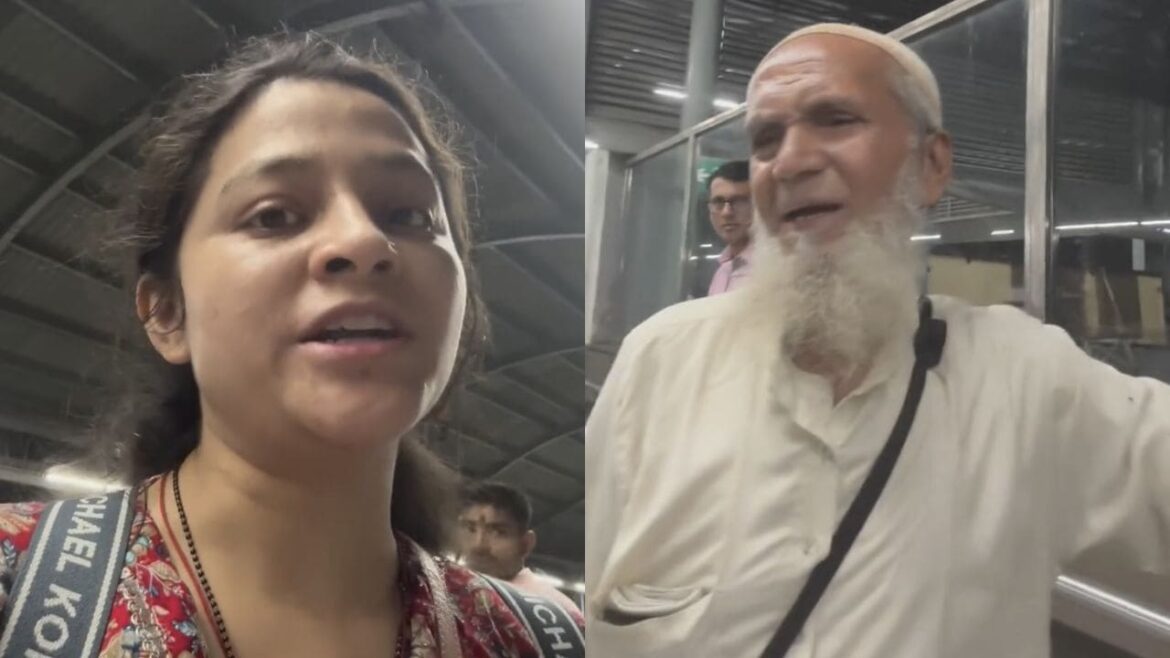
Delhi Metro is often seen as one of India’s most organized public transport systems. However, a recent incident at Kalkaji Mandir Metro Station created a strong reaction online after a video showed an elderly man urinating inside a metro lift.
The incident quickly became a topic of discussion across social media, with people debating public behaviour, civic sense, and whether medical emergencies should be treated differently.
What Happened Inside The Metro Lift?
According to posts shared online, two women were inside a lift at Kalkaji Mandir Metro Station when they noticed an elderly man urinating inside the enclosed space.
The situation reportedly shocked the passengers because the lift was being used normally and people were present inside.
One of the women later shared her experience publicly, and the video started spreading online.
Woman’s Reaction Started A Bigger Conversation
Passengers Questioned Public Behaviour
The woman reportedly confronted the elderly man and questioned his actions.
The exchange became part of the online discussion because many people felt public transport areas should remain safe and hygienic for everyone.
Others argued that public shaming without understanding the full situation may also create problems.
Delhi Police And DMRC Respond
View this post on Instagram
Authorities Shared Their Version
After the video gained attention, Delhi Police and Delhi Metro Rail Corporation responded publicly.
Officials explained that the elderly passenger was reportedly travelling and may have been facing a medical emergency.
According to the response, the individual was trying to find toilet facilities but could not manage the situation in time.
Authorities also stated that action was later taken under metro rules for causing nuisance inside metro premises.
Why This Incident Created Mixed Opinions
Public Decency Vs Medical Emergency
The reaction online became divided.
One group felt that public places must remain clean and such behaviour cannot be accepted.
Another group argued that age and medical conditions should also be considered before making harsh judgments.
The discussion moved beyond one incident and became a wider debate about how cities support elderly passengers.
Do Public Spaces Need Better Facilities?
Small Infrastructure Changes Can Help
This incident also raised practical questions.
People asked whether metro stations should improve:
- Toilet visibility
- Emergency assistance access
- Better guidance for elderly passengers
- Faster staff support
Simple changes may help prevent uncomfortable situations.
Civic Sense Is Not Just About Rules
Civic sense is often discussed only from the passenger side.
But public systems also play an important role by creating facilities that people can access quickly during emergencies.
Responsibility works both ways.
Conclusion
The Kalkaji Metro lift incident created strong reactions because it involved hygiene, public behaviour, and passenger comfort. While authorities later suggested that a medical emergency may have contributed to the situation, the incident also highlights the importance of civic responsibility, better support systems, and maintaining dignity for everyone in public spaces.
FAQs
Where did the incident happen?
The incident was reported at Kalkaji Mandir Metro Station in Delhi.
Why did the video become viral?
People reacted strongly because the act happened inside a metro lift with passengers present.
What did authorities say?
Authorities stated that the elderly man may have been dealing with a medical situation.
Was any action taken?
Officials said action was taken under metro rules.
What discussion did this create?
The incident started conversations about civic sense, public hygiene, and emergency support in public spaces.