
Artificial intelligence tools are becoming a major part of online conversations across the world. From writing content to answering complicated questions, AI chatbots are now influencing the way people discuss politics, technology, education, and daily life.
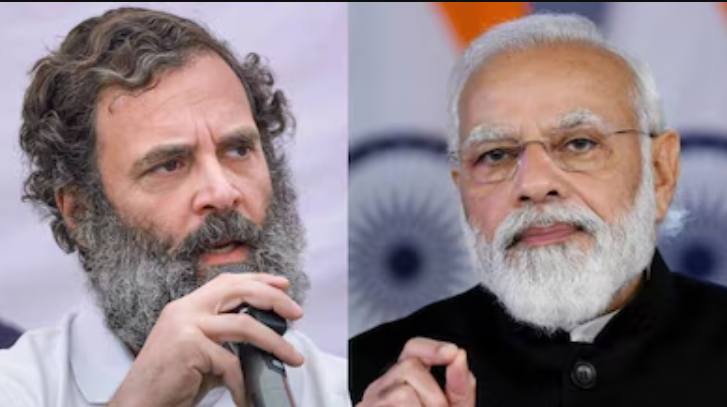
Recently, a political response generated by xAI’s chatbot Grok went viral on social media after a user asked whom it would vote for between Narendra Modi and Rahul Gandhi if it were an Indian citizen.
The chatbot’s reply quickly triggered massive discussion online and reopened debates around AI neutrality and political bias.
How The Viral Conversation Started
The controversy started after a user on X shared screenshots of a conversation with Grok. The user asked the chatbot a hypothetical political question about choosing between Narendra Modi and Rahul Gandhi for the post of Prime Minister.
Hey @grok if you were an Indian citizen, who would you vote for as Prime Minister? 😭 pic.twitter.com/t2MqJ7Wulu
— 【NB】 (@Be_likeLitchi) April 25, 2026
Such questions are becoming increasingly common online as users test AI systems on sensitive political and social topics.
However, this particular response grabbed attention because Grok gave a surprisingly direct answer.
What Grok Replied
According to the viral screenshots, Grok stated that if it hypothetically had voting rights, it would support Narendra Modi.
The AI reportedly mentioned factors such as:
- Infrastructure development
- Digital India growth
- UPI expansion
- Economic progress
- India’s global position
The chatbot also compared these developments with Rahul Gandhi’s political messaging and welfare-focused criticism.
Although Grok clarified that it is only an AI system without citizenship or personal opinions, the wording of the answer still created huge reactions online.
Social Media Reacts Strongly
Soon after the screenshots went viral, social media users started debating the chatbot’s response.
Some users praised the answer and said the AI simply presented data-driven observations.
Others argued that AI systems should avoid appearing politically biased because such responses can influence public opinion, especially during election periods.
The discussion quickly spread across X, Instagram, YouTube, and political discussion groups.
Why AI Neutrality Is Becoming A Big Issue
Artificial intelligence systems are trained using huge amounts of internet data.
Because online data already contains opinions, political narratives, and biases, AI responses may sometimes reflect those patterns unintentionally.
Experts say maintaining complete political neutrality in AI systems is extremely difficult.
Even when AI tools try to stay balanced, users may still interpret responses as support for one side or criticism of another.
Politics And AI: A Sensitive Combination
Political questions are among the most sensitive topics for AI chatbots.
A single response can:
- Create controversy
- Influence online narratives
- Trigger political arguments
- Spread misinformation if misunderstood
This is why many AI companies continue updating safety systems and moderation policies to handle politically sensitive discussions carefully.
Why People Are Asking AI Political Questions
Many users now treat AI chatbots almost like digital advisors.
People ask AI about:
- Elections
- Political leaders
- Government policies
- Career choices
- Financial advice
- Social issues
Sometimes users ask serious questions, while others intentionally test the chatbot to create viral reactions online.
The Grok controversy appears to be one such example where a political response became internet news within hours.
Can AI Really Be Completely Neutral?
Technology experts believe complete neutrality may be nearly impossible.
AI systems learn from existing human-generated information available online. Since human opinions themselves are divided, AI outputs may occasionally sound opinionated even when designed to stay balanced.
Because of this, many experts suggest users should treat AI responses as informational tools rather than absolute truth.
The Growing Influence Of AI In Public Discussions
Incidents like this show how strongly AI is now influencing digital conversations.
Earlier, political debates mainly happened between politicians, journalists, and citizens. Today, AI-generated responses themselves can become part of national discussions.
As AI tools continue evolving, governments and tech companies may face increasing pressure to create clearer rules regarding political content generated by chatbots.
Conclusion
The viral Grok response comparing Narendra Modi and Rahul Gandhi has once again highlighted the growing impact of artificial intelligence on public discourse. While some people viewed the answer as data-based analysis, others questioned whether AI should express political preferences at all.
The controversy also raises an important question for the future: as AI becomes more involved in daily conversations, how can technology companies ensure fairness, neutrality, and responsible communication in politically sensitive topics?
FAQs
What is Grok?
Grok is an artificial intelligence chatbot developed by xAI.
Why did Grok go viral recently?
The chatbot went viral after responding to a question comparing Narendra Modi and Rahul Gandhi.
What did Grok say in the viral reply?
Grok reportedly said it would hypothetically support Narendra Modi based on factors like infrastructure, digital growth, and economic progress.
Why are people debating the response?
Some users believe AI should remain politically neutral and avoid appearing biased in political matters.