
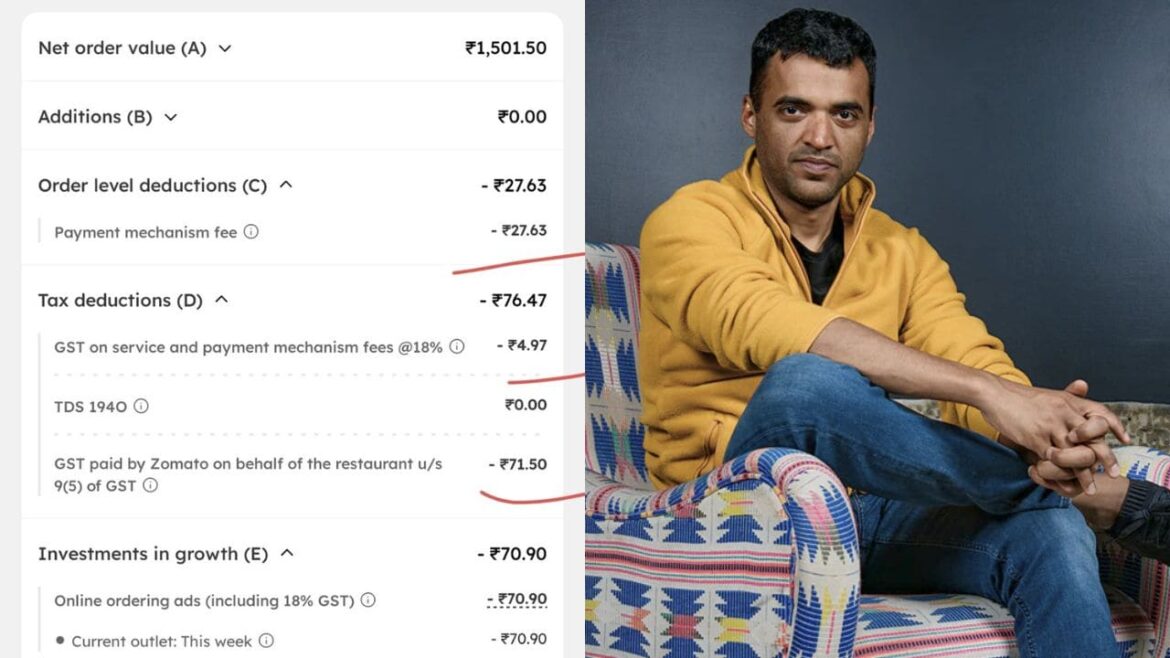
Food delivery giant Zomato is once again facing criticism online after a restaurant partner raised questions about payment deductions and convenience fees charged on orders.
The issue became viral after a restaurant owner shared a post on X (formerly Twitter), claiming that multiple charges were being deducted from restaurant payments even though customers were already paying extra fees separately.
The viral complaint quickly sparked discussions among restaurant owners, customers, and social media users about transparency in India’s growing food delivery industry.
Restaurant Owner Questions Multiple Charges
The controversy started when a restaurant partner publicly shared concerns regarding deductions made by Zomato from order settlements.
@IncomeTaxIndia @zomato @deepigoyal restaurant ID : 22641557
Dear income tax department.. just see how much money zomato. Is deducting from restaurant partner.. why I will pay payment mechanism fees? Why I will pay convenience fee when customer is already paying? Whyy? pic.twitter.com/UdWP8fQqdm
— HK (@KhemkaHema7663) April 16, 2026
The user questioned why restaurants were being charged payment mechanism fees and convenience fees when customers were already paying additional charges on the app.
Along with the post, screenshots of payment details and settlement summaries were also shared online. These screenshots reportedly showed different types of deductions applied to the order amount before the final payment reached the restaurant owner.
Soon, the post started receiving massive attention across social media platforms.
What The Viral Screenshot Revealed
According to the shared settlement details, several deductions were reportedly made from the restaurant’s earnings.
The screenshots mentioned charges connected to payment processing, tax deductions, GST, and convenience fees. The restaurant owner argued that some of these deductions appeared confusing and overlapping.
Many users online said the billing structure looked difficult to understand, especially for small business owners trying to calculate actual profits from online orders.
The viral post restarted larger discussions about how food delivery platforms distribute costs between restaurants, customers, and the platform itself.
Zomato Responds After Social Media Backlash
After the post went viral, Zomato’s support team publicly replied to the complaint online.
The company acknowledged the concern and reportedly said the issue would be reviewed internally. However, the response did not immediately answer all the questions raised by users regarding the fee structure.
Despite the reply, the discussion continued online as more people shared their own experiences related to restaurant commissions and platform charges.
Food Delivery Platforms Under Increasing Scrutiny
In recent years, food delivery apps have become an important part of urban life in India. Millions of people regularly use apps like Zomato to order meals from nearby restaurants.
However, restaurant owners have often raised concerns about commissions, promotional costs, delivery charges, and other deductions that impact profitability.
Small and medium restaurant businesses especially say that platform fees can significantly affect their earnings.
At the same time, customers also frequently complain about rising convenience fees, delivery charges, and surge pricing.
Why Transparency Matters In Online Food Delivery
Experts believe transparent billing systems are important for maintaining trust between restaurants, customers, and food delivery companies.
When charges become too complicated or unclear, confusion and frustration increase among business partners and consumers alike.
Clear explanations about how fees are calculated can help avoid misunderstandings and improve confidence in digital platforms.
As competition in India’s online food delivery market continues growing, companies may face increasing pressure to simplify their pricing systems.
Social Media Giving Small Businesses A Voice
Earlier, restaurant owners mostly depended on direct customer feedback or business meetings to raise concerns. Today, social media allows small businesses to publicly highlight issues within minutes.
A single viral post can attract national attention and force large companies to respond quickly.
Many users online supported the restaurant owner for speaking openly about concerns that several small businesses may quietly experience.
Debate Over Convenience Fees Continues
Convenience fees have already become a controversial topic among Indian consumers.
Many users often question why separate platform fees are added even after delivery charges, taxes, and restaurant prices are included.
Now, this latest controversy has extended the discussion further by raising questions about whether restaurants are also bearing some of these extra costs.
The issue has once again placed food delivery platform pricing models under public discussion.
Conclusion
The viral complaint against Zomato regarding payment mechanism fees and convenience fee deductions has reopened an important conversation about transparency in India’s online food delivery industry. While Zomato has acknowledged the issue and promised to review the matter, many restaurant owners and customers continue asking for clearer explanations regarding billing structures.
As food delivery platforms become a major part of daily life, maintaining trust through transparent pricing and fair practices will remain extremely important for both businesses and consumers.
FAQs
Why did the restaurant owner complain about Zomato?
The restaurant owner questioned multiple deductions, including payment mechanism fees and convenience fees.
Did Zomato respond to the complaint?
Yes, Zomato publicly acknowledged the issue and said it would review the matter.
What issue became controversial in the viral post?
Users raised concerns about overlapping charges and lack of clarity in fee calculations.
Why are convenience fees often criticised?
Many customers and restaurant owners feel convenience fees increase overall costs without clear explanation.