
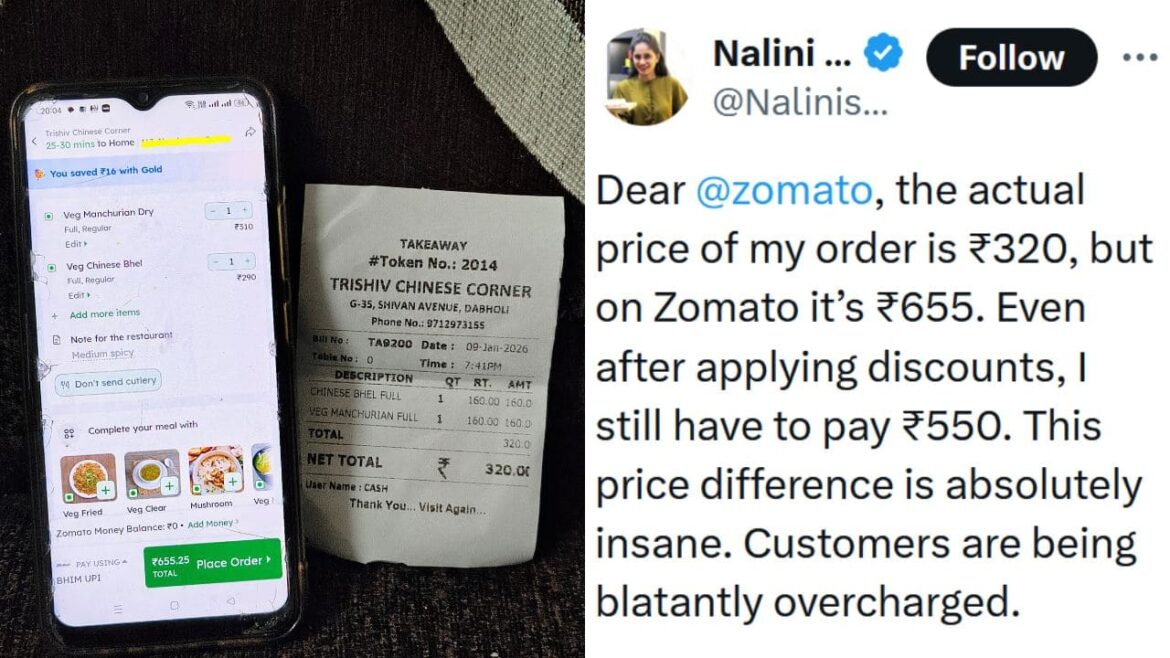
A recent post on social media has once again raised serious questions about food delivery pricing in India. A woman’s comparison between a restaurant’s takeaway bill and a Zomato app order showed a massive difference, triggering anger among users and forcing Zomato to respond. The issue has now turned into a wider debate about transparency, commissions, and customer trust.
What Exactly Happened
A woman shared her experience on X (formerly Twitter) after ordering food from a local restaurant through Zomato. According to her, the same food items that cost ₹320 when bought directly from the restaurant were priced at ₹655 on the app.
She backed her claim by posting screenshots of:
- The Zomato app bill
- The actual takeaway bill from the restaurant
The difference shocked many users, as even after discounts, the final payable amount on the app was much higher than the restaurant price.
Why the Post Went Viral
The post quickly gained attention because many people could relate to it. Several users commented that they had faced similar situations but never compared bills so clearly.
Within hours:
- The post received lakhs of views
- Thousands of likes and comments followed
- Users shared their own screenshots and stories
This showed that the issue was not limited to one customer or one restaurant.
Zomato’s Official Response
After the post gained traction, Zomato responded publicly. The company stated that:
- Food prices on the app are decided by restaurant partners
- Zomato works only as a platform connecting customers and restaurants
- The feedback would be shared with the restaurant
This response was similar to what Zomato has said in earlier cases.
The Question That Changed the Debate
The woman then asked a direct and important question to Zomato:
-
What percentage commission does Zomato charge restaurants per order?
This question shifted the focus from restaurant pricing to platform charges. After this, Zomato did not give any public reply, which further increased criticism and speculation.
Understanding Why App Prices Are Higher
There are several reasons why food prices on delivery apps are often higher:
Restaurant Commission
Delivery platforms charge restaurants a commission that can range from 15% to over 30% per order. Many restaurants increase menu prices on apps to cover this cost.
Convenience Cost
Customers pay for convenience, including:
- Home delivery
- App usage
- Customer support
Additional Charges
Apart from food prices, users also pay:
- Delivery fees
- Platform fees
- Packaging charges
- GST
When combined, these can double the final amount.
Public Reaction and User Anger
Many users questioned why there is no clear disclosure about:
- Platform commissions
- Real restaurant prices
- How much extra customers are paying
Some users supported restaurants, saying they are forced to raise prices due to high commissions. Others blamed platforms for lack of transparency.
The common feeling was that customers are paying too much without clear information.
Is This Legal or Ethical?
Legally, platforms can allow restaurants to set different prices. However, ethically, many believe:
- Customers should be clearly informed
- Price differences should be shown openly
- Platforms should explain their fee structure
Transparency can help users make informed decisions.
What Customers Can Do
To avoid overpaying:
- Compare prices with restaurant takeaway menus
- Order directly from the restaurant when possible
- Use delivery apps only when convenience is necessary
- Check final bill breakup carefully
Small steps can help save money.
Conclusion
The Zomato price difference case has highlighted a long-standing issue in India’s food delivery ecosystem. While platforms provide comfort and speed, the cost of this convenience is often hidden. The viral post forced a discussion, but unanswered questions remain about commissions and transparency.
For trust to improve, delivery platforms need to clearly explain pricing structures. Until then, customers must stay alert and make informed choices before placing orders.
FAQs
What was the price difference highlighted in the viral post?
The restaurant bill was ₹320, while the Zomato app showed ₹655 for the same items.
Did Zomato accept responsibility for the higher price?
Zomato said that prices are set by restaurant partners, not by the platform.
Why do restaurants charge more on delivery apps?
Restaurants often increase prices to cover platform commissions and operational costs.
Does Zomato charge commission from restaurants?
Yes, Zomato charges a commission, though the exact percentage is not publicly disclosed.
Can customers avoid paying higher prices?
Yes, by ordering directly from restaurants or comparing prices before placing an order.
Is this the first time Zomato faced such criticism?
No, similar complaints about inflated prices have surfaced multiple times in the past.