
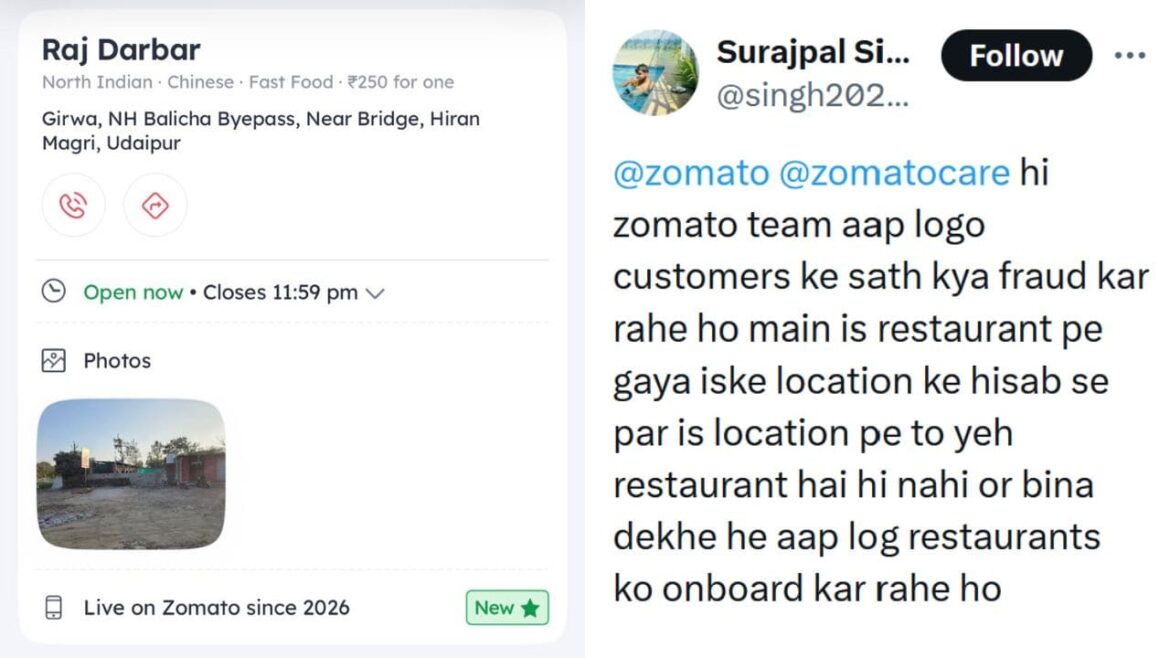
A complaint against food delivery platform Zomato has gone viral on social media after a customer claimed that a restaurant listed on the app did not exist at the mentioned location. The issue has raised serious questions about how online food platforms verify restaurants before listing them.
Online food delivery apps are trusted by millions of users every day. But incidents like this make customers wonder whether platforms are doing enough to protect users from misleading information.
Customer Raises Alarm on Social Media
On January 24, a user named Surajpal took to X (formerly Twitter) to share his experience with a restaurant listing on Zomato. He posted screenshots of a restaurant called Raj Darbar that was shown as operational in Udaipur, Rajasthan.
According to the app, the restaurant served North Indian, Chinese, and fast food at affordable prices. However, Surajpal claimed that when he checked the address shown on the app, there was no restaurant at that location.
Allegation of Misleading Customers
The customer strongly criticised Zomato, accusing the platform of cheating users. In his post written in Hindi, he questioned how such listings were allowed without proper checks.
He alleged that Zomato was onboarding restaurants without physical verification, which could lead to fake or inactive outlets being shown as live on the app. The post quickly gained attention and triggered a wider discussion on customer safety and transparency.
Concerns Over Verification Process
Many social media users supported the customer and shared similar concerns. Some users claimed they had also faced issues with incorrect restaurant locations or non-operational outlets.
Food delivery apps usually depend on partner registrations and documents. However, experts believe that physical checks and regular audits are necessary to avoid fake listings and protect customer trust.
Zomato Acknowledges the Complaint
Zomato responded publicly to the complaint and thanked the customer for reporting the issue. The company assured that it would look into the matter.
Later, when the customer asked for updates, Zomato said the issue was under review and requested some time to investigate.
Follow-Up Response From Zomato
After a few days, Zomato again replied and asked the customer to share his registered mobile number through direct message. The company said this was needed to provide a proper update on the complaint.
While Zomato stayed in touch, some users felt the response was slow and lacked clarity. The delay sparked online debate about how quickly large platforms should act on serious complaints.
Why This Issue Matters
Fake or incorrect restaurant listings can cause inconvenience, waste time, and reduce trust in food delivery apps. Customers rely on accurate information when placing orders, especially in unfamiliar areas.
Such incidents highlight the need for stronger checks, faster complaint handling, and better communication with users.
Conclusion
The Zomato fake restaurant listing complaint has once again brought attention to the importance of transparency and verification in online food delivery platforms. While Zomato has acknowledged the issue and promised an investigation, users expect quicker action and clearer updates.
As food apps continue to grow in India, maintaining customer trust through strict verification and prompt support will be crucial. Platforms must ensure that convenience does not come at the cost of credibility.
FAQs
What was the complaint against Zomato about?
A customer claimed that a restaurant listed on Zomato did not exist at the given address and accused the platform of misleading users.
How did Zomato respond to the issue?
Zomato acknowledged the complaint, said it would investigate, and later asked the customer to share his registered mobile number for further updates.
Why are fake restaurant listings a serious issue?
Fake listings can mislead customers, waste time, and reduce trust in online food delivery platforms.
Does Zomato verify restaurants before listing them?
Zomato follows a registration process, but incidents like this raise questions about the need for stronger physical verification and regular checks.
What can customers do if they find a fake listing?
Customers should report the issue directly on the app or through Zomato’s official social media support handles.