
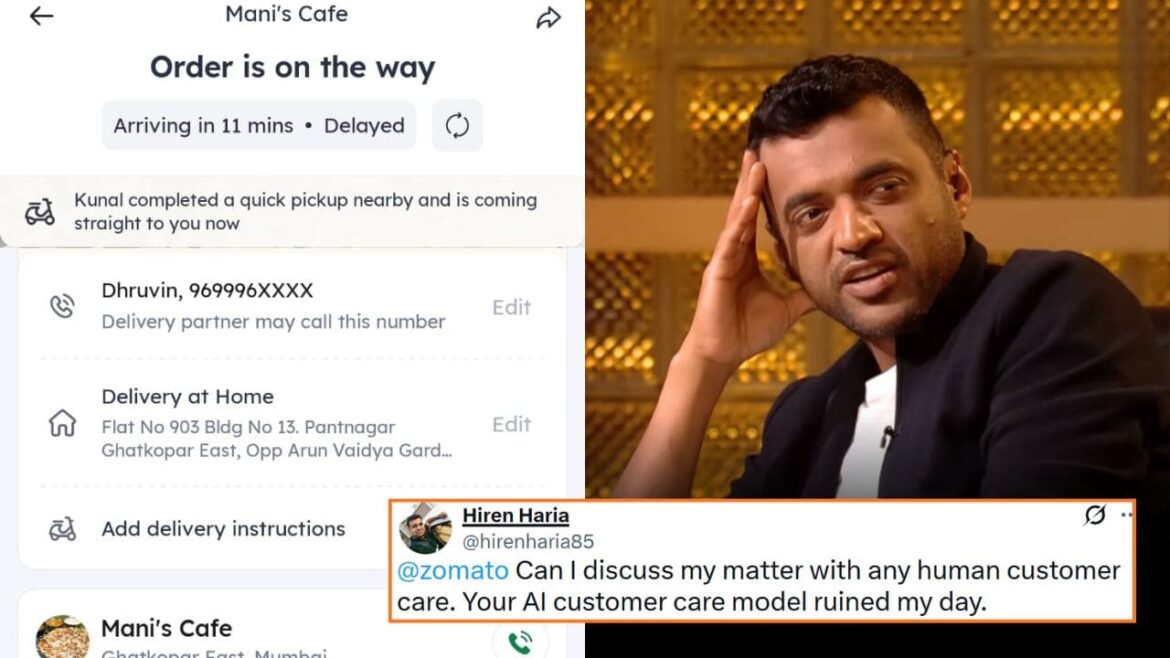
Food delivery apps have become part of daily life in India. Ordering food today is fast, easy, and just one tap away. But along with this convenience, many users are now facing a new problem — dealing only with AI chatbots instead of real humans. Recently, this issue came into the spotlight after a Mumbai-based customer publicly asked Zomato for human customer support.
The incident quickly went viral on social media and sparked a fresh debate on whether AI-only customer care is actually helping users or creating more frustration.
Customer Gets Frustrated With AI Replies
The issue began when a Mumbai resident faced a delay in his food order. Like most users, he tried to resolve the problem through Zomato’s in-app customer care. However, instead of getting a clear solution, he was repeatedly answered by automated AI messages.
@zomato Can I discuss my matter with any human customer care. Your AI customer care model ruined my day. pic.twitter.com/nVsyLPy5On
— Hiren Haria (@hirenharia85) December 11, 2025
Feeling ignored and helpless, the customer decided to take the matter to social media platform X. In his post, he openly requested Zomato to connect him with a real human executive, stating that the AI system had ruined his experience.
Social Media Becomes The Only Option
The screenshots shared by the customer showed delayed delivery and repeated automated responses. According to him, the AI chatbot failed to understand the urgency of the situation. This is when he publicly tagged Zomato and its customer care handle, asking if human support was still available.
Hey Hiren, we understand you were looking for better support. Rest assured, we have taken a note of your order details, and we’ll reach out to you once we have an update on your concern.
— Zomato Care (@zomatocare) December 11, 2025
Many users online related to his frustration, as similar complaints about AI-based customer service are becoming common across many apps.
Zomato’s Public Response To The Complaint
After the post gained attention, Zomato’s customer care team replied publicly. The company acknowledged the issue and assured the customer that his order details had been noted. Zomato also mentioned that they would update him once they had more information.
Later, Zomato shared another response, asking the customer for some time and stating that they were working on resolving the issue. While the replies were polite, they still did not clearly confirm immediate human-to-human interaction.
Why AI Customer Care Is Frustrating Users
AI-powered customer support is designed to handle large volumes of queries quickly. It works well for simple issues like order status or refunds. However, when problems become complex or urgent, customers often want emotional understanding and clear answers — something AI struggles to provide.
Many users feel that AI responses are repetitive, slow, and sometimes completely unrelated to the actual issue. This makes customers feel unheard, especially when money or time is involved.
Need For A Better Balance Between AI And Humans
This incident highlights an important gap in modern customer service. While AI helps companies save time and cost, human support is still essential for complex or sensitive matters. A hybrid model could be the solution — where AI handles basic queries and humans step in when required.
Providing users with an option to escalate issues to human executives can improve trust and satisfaction.
Public Reaction And Growing Concern
The incident triggered discussions online, with many users sharing similar experiences. Several people questioned whether companies are focusing more on efficiency than customer happiness. Others demanded that food delivery platforms clearly mention when and how human support can be accessed.
This growing dissatisfaction could push companies to rethink how much control AI should have in customer-facing roles.
Conclusion
The viral incident involving Zomato and a frustrated customer highlights a real issue faced by millions today. While AI has made services faster, complete dependence on automation can damage customer trust. Zomato’s response shows awareness, but the situation also serves as a reminder that technology should support people, not replace human connection entirely.