
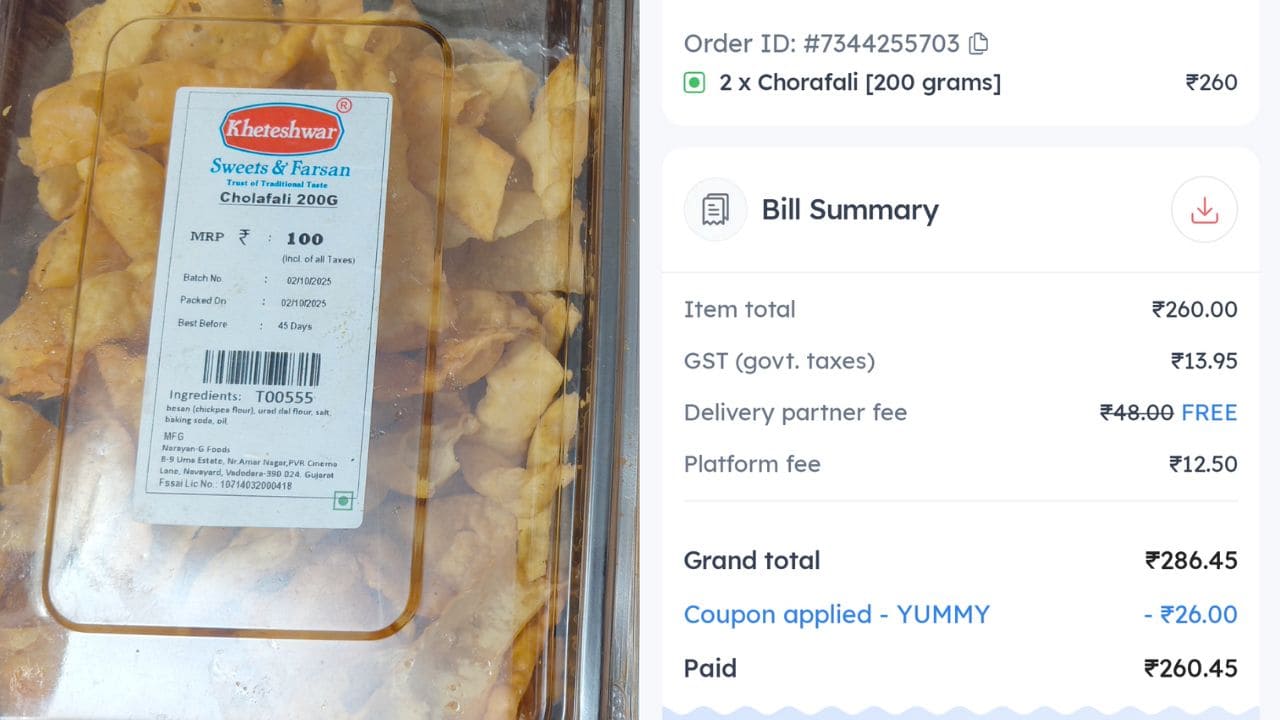
A recent complaint on social media has again raised questions about pricing on food delivery apps. A customer claimed that Zomato charged him more than the MRP printed on a packaged food item.
The user shared photos showing that he paid ₹130 on Zomato for a packet that had an MRP of ₹100. The post quickly went viral, with many users discussing similar experiences.
User Shares Photos as Proof
Hi Adaas, Zomato being an intermediary platform between a customer and a restaurant, does not govern the prices implemented by the restaurant partners on our platform. That said, we do implement checks to avoid discrepancies when it comes to MRP items. Please allow us some time…
— Zomato Care (@zomatocare) October 5, 2025
Images Shared on Social Media
The customer, posting under the name Addas Bhavan, uploaded two pictures:
- His Zomato order bill showing ₹130 charged for a 200g packet
- A market photo of the same item with an MRP label of ₹100
- He alleged that both the restaurant and the platform were “overcharging customers” and called them out publicly.
Zomato Gives Clarification
Zomato Says It Does Not Control Restaurant Prices
Responding to the viral post, Zomato clarified that it only acts as a middle platform, connecting customers to restaurants. The company said it does not regulate or decide restaurant pricing.
Zomato also mentioned that it performs checks for MRP-based items but requested time to investigate the specific case.
Why Do Prices on Delivery Apps Seem Higher?
Extra Charges Add Up
In many cities, customers have noticed that delivery app prices are often higher than dine-in rates. Some common reasons are:
- Restaurant mark-ups on delivery menus
- Packaging charges
- Platform commissions
- Convenience and delivery fees
This means the final bill can be significantly more than the restaurant’s original price.
Convenience vs Cost Debate
While apps like Zomato and Swiggy have made food ordering incredibly easy, many consumers feel the cost of convenience is becoming too high. With posts like this going viral, the debate over transparency and fair pricing continues.
Impact on Consumer Trust
Need for More Transparency
Food delivery has become a part of daily life for millions, but users now want clearer price policies. If such issues repeat frequently, customers may move to alternative options like direct restaurant ordering or local food delivery services.
Maintaining trust is extremely important for platforms working in real-time service industries.
Conclusion
Zomato’s response to the customer’s complaint highlights a larger issue that many Indians have been discussing—why are delivery prices often higher than real MRP or restaurant rates?
The platform has promised to look into the case, but the incident has once again brought the focus on transparency in food delivery pricing. As customers continue to demand fairness, companies will need to improve clarity and ensure such issues are resolved quickly to maintain long-term trust.
FAQs
Is Zomato allowed to charge above MRP?
Zomato says it does not decide prices. Restaurants set their own pricing, which may differ from market MRP.
Why is restaurant pricing higher on apps?
Restaurants often increase prices to cover packaging, delivery commissions, and operational costs for online orders.
Can customers complain about overcharging?
Yes, users can raise complaints through Zomato’s customer support or on social media with evidence.
Does Zomato check MRP-tagged items?
The company claims it has checks in place but is investigating this specific case.
Are delivery apps becoming too expensive?
Many users feel so, as extra charges and price markups often increase the total bill significantly.