
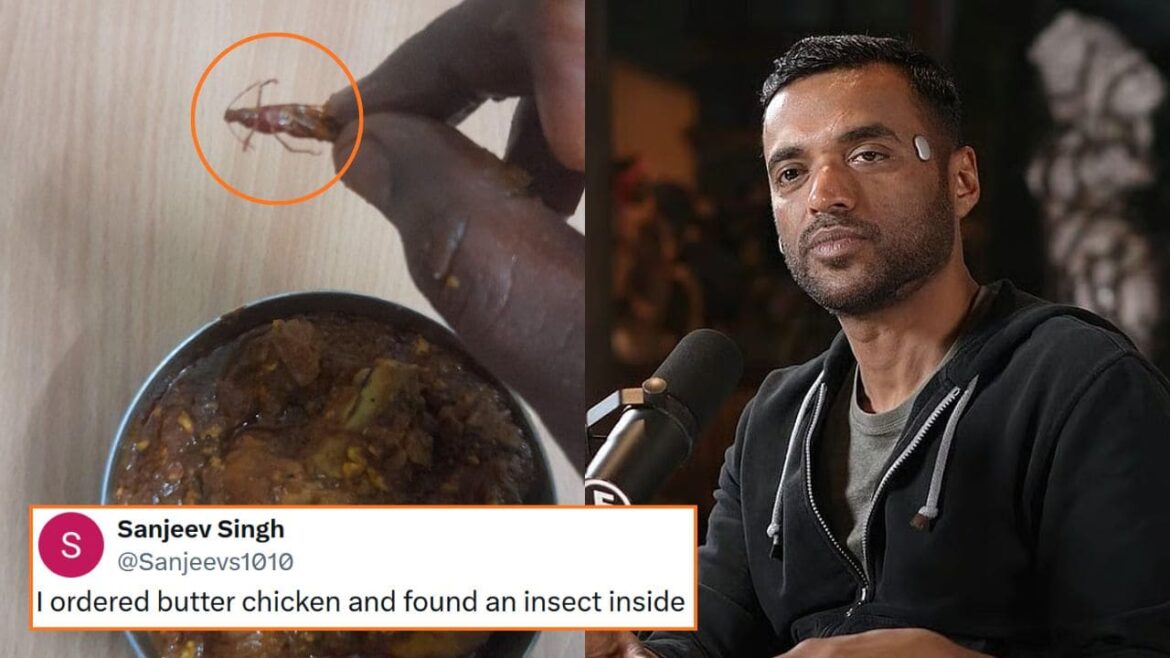
Zomato is once again in the spotlight after a customer shared a disturbing food safety complaint on social media. The customer alleged that an insect was found in a butter chicken dish ordered through the platform. The incident quickly went viral and raised serious questions about hygiene and quality checks in online food delivery.
What Was the Customer’s Complaint?
The customer took to social media platform X to express his anger and disappointment. He claimed that what was supposed to be a normal meal turned into a shocking experience when he noticed an insect inside the butter chicken.
@zomatocare @zomato
Order id – 7674276826
I ordered butter chicken and found an insect inside
Wasn’t able to eat anything afterwards .
Even vomitted seriously 2 times
This is a serious concern
Also my money is wasted i need refund pic.twitter.com/yoMTtrIjsS— Sanjeev Singh (@Sanjeevs1010) January 11, 2026
According to his post, the sight of the insect made him feel sick and completely spoiled his appetite. He also mentioned that the incident affected his health and caused extreme discomfort.
Photos Shared to Support the Claim
To strengthen his complaint, the customer shared pictures of the food along with the alleged insect. The images left many users shocked and uncomfortable, with several people questioning how such incidents still happen despite food safety rules.
@zomatocare @zomato
Order id – 7674276826
I ordered butter chicken and found an insect inside
Wasn’t able to eat anything afterwards .
Even vomitted seriously 2 times
This is a serious concern
Also my money is wasted i need refund pic.twitter.com/yoMTtrIjsS— Sanjeev Singh (@Sanjeevs1010) January 11, 2026
The post spread rapidly, with users demanding strict action and better monitoring of restaurant partners.
Zomato’s Official Response
Zomato Care replied publicly to the complaint, calling the incident unfortunate. The company assured the customer that the matter would be taken seriously and discussed with the restaurant involved.
Zomato also informed that they had reached out to the customer through direct messages to resolve the issue privately, including support and possible compensation.
Why Food Safety Issues Are a Big Concern
Incidents like these are not just about refunds. Finding an insect in cooked food can cause serious health risks and long-term loss of trust. Customers rely on food delivery apps for safe and hygienic meals, especially families and working professionals.
Even one such case can damage a brand’s reputation and make users hesitant to order again.
Netizens React Strongly Online
Social media users reacted with anger and concern. Many shared their own bad experiences with food delivery, while others demanded stricter checks and penalties for restaurants violating hygiene standards.
Some users also appreciated Zomato’s quick reply but insisted that action matters more than apologies.
What Customers Should Do in Such Situations
Experts suggest that customers should immediately stop eating, take clear photos, keep the bill and order ID, and report the issue to the platform. Posting on social media often speeds up responses, but official complaints are equally important.
Conclusion
The Zomato insect-in-food case once again highlights the importance of food safety in online deliveries. While Zomato responded quickly, customers expect strong action, not just messages and refunds. As food delivery becomes a daily habit, platforms must ensure strict quality control to protect customer health and trust.
FAQs
What should I do if I find an insect in my food order?
Stop eating immediately, take photos, save your order details, and report the issue to the delivery app and restaurant.
Does Zomato refund money in such cases?
In most cases, Zomato reviews the complaint and may offer a refund or compensation after verification.
Can such food cause health problems?
Yes, contaminated food can lead to food poisoning, vomiting, or infections. Medical advice should be taken if symptoms appear.
Are restaurants checked regularly by food delivery apps?
Food platforms claim to conduct checks, but responsibility also lies with restaurant partners to maintain hygiene.