
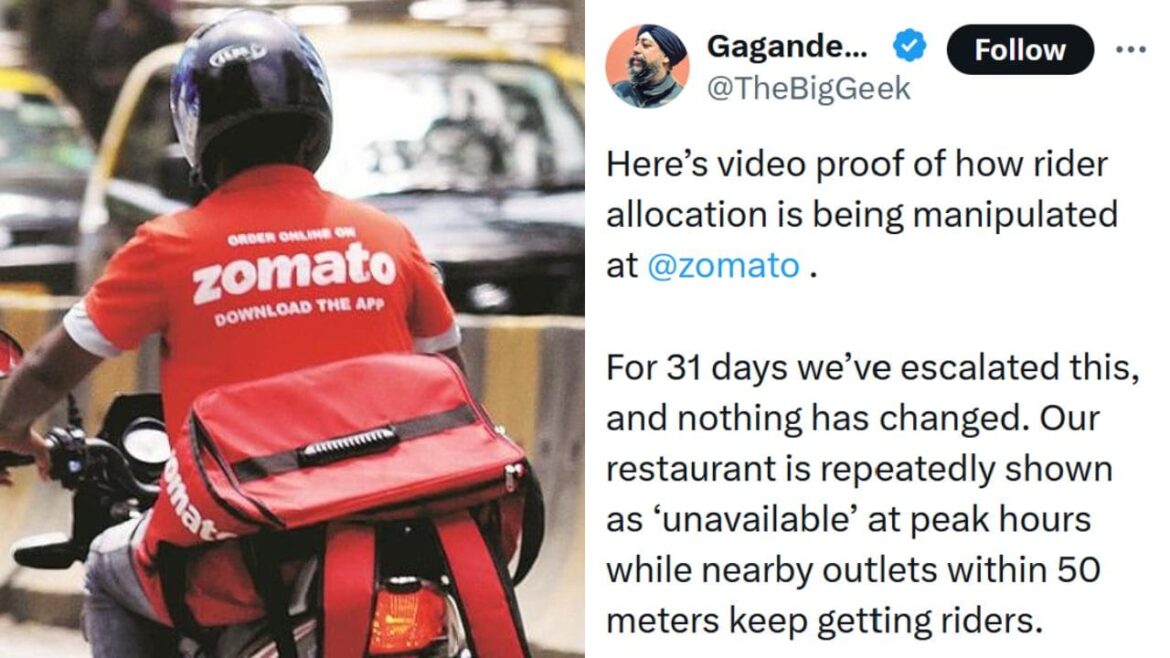
The food delivery business in India is growing fast, but complaints about fairness and transparency also keep rising. A recent allegation by a Delhi restaurant owner once again sparked a public debate on how delivery platforms assign riders and orders. The claim became viral, forcing Zomato’s top leadership to respond.
Delhi Restaurant Owner Raises Serious Complaint
A Delhi-based restaurateur, Gagandeep Singh Sapra, posted a video online claiming that Zomato is showing his outlet as “unavailable” during busy hours. He said nearby restaurants are still getting riders, while his outlet is blocked from receiving orders.
According to Gagandeep, this problem has continued for more than a month, even after he repeatedly contacted Zomato’s support team. He alleged that the rider allocation system is biased and is not functioning fairly for all restaurants.
Allegation of Manipulated Rider Allocation
In his post, Gagandeep mentioned that the delivery system seems to give preference to some restaurants, while others face a drop in visibility during peak hours. He also said that some riders receive more orders, while others wait for long periods without any assignment.
These claims raised questions about how delivery platforms use their internal algorithms and whether restaurants should be given more transparency about order allocation.
Zomato’s CEO Responds Publicly
After the post went viral, Zomato CEO Aditya Mangla responded directly. He assured that the company will check the matter and understand what went wrong.
His reply indicated that Zomato is taking the allegation seriously. Though no detailed explanation has come yet, the CEO’s acknowledgment helped calm some of the online discussions.
How Social Media Reacted
The incident immediately triggered thousands of reactions online.
Many restaurant owners shared similar experiences of vanishing visibility during rush hours. They said this affects their business and creates financial pressure on staff as well.
On the other hand, some users defended Zomato, saying that large platforms use automated systems which may not always appear fair from the outside but are designed to maintain speed and efficiency.
The debate highlighted the growing concern around the “algorithm economy,” where businesses depend heavily on unseen systems controlled by big tech platforms.
Why This Issue Matters
Food delivery platforms have become a major backbone for restaurants, especially small businesses. Any bias or error in rider allocation can directly impact their sales.
Experts say that transparency is now becoming as important as technology. Restaurants want clear information about:
- How riders are assigned
- Why some outlets appear unavailable
- What factors influence order distribution
- Whether the algorithm treats all restaurants equally
This incident is expected to push Zomato—and possibly Swiggy—towards clearer communication about their systems.
Conclusion
The allegation against Zomato has opened a new chapter in the conversation about fairness and transparency in India’s digital food delivery ecosystem. As customers and businesses rely more on these platforms, such controversies show the need for clear policies and open communication.
Zomato’s CEO has promised to investigate the issue, but restaurant owners continue to demand long-term structural transparency. Whether this incident leads to real change will become clear in the coming weeks.
FAQs
What was the allegation made by the Delhi restaurateur?
He claimed that Zomato marked his restaurant as “unavailable” during peak hours while nearby outlets continued to get riders.
Did Zomato respond to the claims?
Yes, Zomato CEO Aditya Mangla replied on social media, saying he will check the issue.
Why is rider allocation important for restaurants?
It directly affects their order volume, earnings, customer reach, and overall business growth.
Are such allegations common?
Many restaurant owners have complained about visibility and order distribution in the past, but platforms rarely reveal detailed information.
What are users demanding now?
More transparency, clearer communication, and fairness in order and rider allocation.