
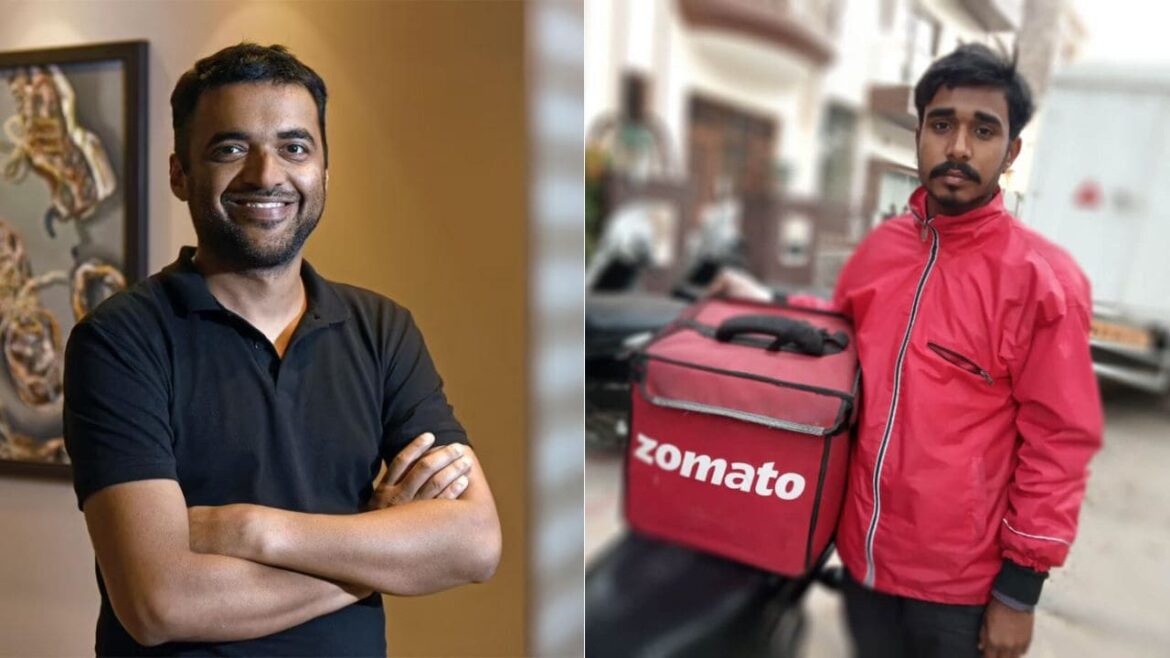
Zomato CEO Deepinder Goyal has publicly spoken in detail about how much delivery partners earn and how the company views gig work. His comments came at a time when there is growing discussion around the rights, safety, and income of app-based delivery workers in India. With strikes and online criticism increasing, Goyal decided to share data and his perspective directly with the public.
This has once again brought the gig economy under the spotlight, especially food delivery and quick commerce platforms like Zomato and Blinkit.
How Food Delivery Has Changed in India
Over the past decade, food ordering in India has changed completely. Earlier, people called restaurants directly. Now, apps like Zomato and Swiggy connect customers, restaurants, and delivery partners instantly.
Facts below (1/5):
In 2025, average earnings per hour (EPH), excluding tips, for a delivery partner on Zomato were ₹102.
In 2024, this number was ₹92. That’s a ~10.9% year-on-year increase. Over a longer horizon also, EPH has shown steady growth.Most delivery partners work…
— Deepinder Goyal (@deepigoyal) January 2, 2026
Along with food delivery, quick commerce has grown rapidly, promising groceries and essentials in minutes. This growth has created lakhs of delivery jobs but has also raised serious questions about income stability, safety, and worker benefits.
What Deepinder Goyal Said About Delivery Partner Income
In his detailed social media thread, Deepinder Goyal shared numbers related to delivery partner earnings. According to him, the average earning per hour of a Zomato delivery partner in 2025 is around ₹102, excluding tips. This shows an increase compared to the previous year.
Delivery partners are not overworked on our platforms. (2/5)
In 2025, the average delivery partner on Zomato worked 38 days in the year and 7 hours per working day, reflecting true gig style participation rather than fixed schedules. Only 2.3% of partners worked more than 250…
— Deepinder Goyal (@deepigoyal) January 2, 2026
He explained that if a delivery partner works around 10 hours a day for about 26 days in a month, the total monthly income comes close to ₹26,500. After expenses like fuel and vehicle maintenance, the take-home income may be around ₹21,000.
Goyal also clarified that these calculations include waiting time between orders and that delivery partners receive 100% of customer tips directly.
Is Gig Work Really Full-Time? Zomato’s View
One of the biggest criticisms against food delivery platforms is that workers are forced into full-time work without full-time benefits. Goyal countered this claim using company data.
According to him, most delivery partners work only for limited days in a year. On average, partners worked for around 38 days in 2025, with about 7 hours per working day. Only a very small percentage worked almost throughout the year.
He stated that delivery partners are free to choose when and where they work. There is no fixed schedule, no compulsory login hours, and no fixed location.
10-Minute Delivery and Road Safety Concerns
Quick commerce has raised fears about unsafe driving due to fast delivery promises. Addressing this, Goyal said delivery partners are not shown countdown timers that pressure them to rush.
He explained that faster deliveries usually happen because the stores are closer to customers, not because riders drive faster. However, he also accepted that road safety remains a challenge and needs joint efforts from companies, government, customers, and riders.
Insurance and Welfare Benefits for Delivery Partners
Goyal also spoke about welfare steps taken by Zomato and Blinkit. In 2025, the company reportedly spent over ₹100 crore on insurance coverage for delivery partners.
These benefits include accident insurance, medical coverage, loss of income support, and maternity benefits. The company pays the insurance premiums on behalf of delivery partners.
Apart from insurance, Zomato has introduced support like tax-filing help, rest days for women delivery partners, and access to a pension scheme designed for gig workers.
Public Reaction and Ongoing Debate
The CEO’s statements triggered mixed reactions online. Many people supported the transparency and appreciated the flexibility offered by gig platforms. Others argued that real-life conditions can be very different from official data.
Labour activists continue to demand stronger laws, minimum income guarantees, and clearer accountability from platforms. The debate around gig work fairness is far from over.
Conclusion
The discussion started by Deepinder Goyal has added important data to the ongoing gig economy debate. While platforms highlight flexibility, income opportunities, and welfare programs, critics point out the lack of job security and legal protection.
As food delivery and quick commerce continue to grow in India, the challenge will be to balance business innovation with fair and safe working conditions for delivery partners. The conversation around gig workers’ rights is likely to continue in the coming years.
FAQs
What is the average hourly income of Zomato delivery partners?
According to Zomato, the average earning per hour in 2025 is around ₹102, excluding tips.
Do delivery partners get full tips from customers?
Yes, Zomato states that delivery partners receive 100% of the tips given by customers.
Are Zomato delivery partners full-time employees?
No, they are considered gig workers and can choose their working hours and days freely.
Does 10-minute delivery force riders to drive fast?
Zomato claims that delivery partners do not see delivery timers and faster deliveries happen due to shorter distances, not speed.
What benefits does Zomato provide to delivery partners?
Benefits include insurance coverage, medical support, maternity benefits, tax-filing help, and access to a pension scheme.