
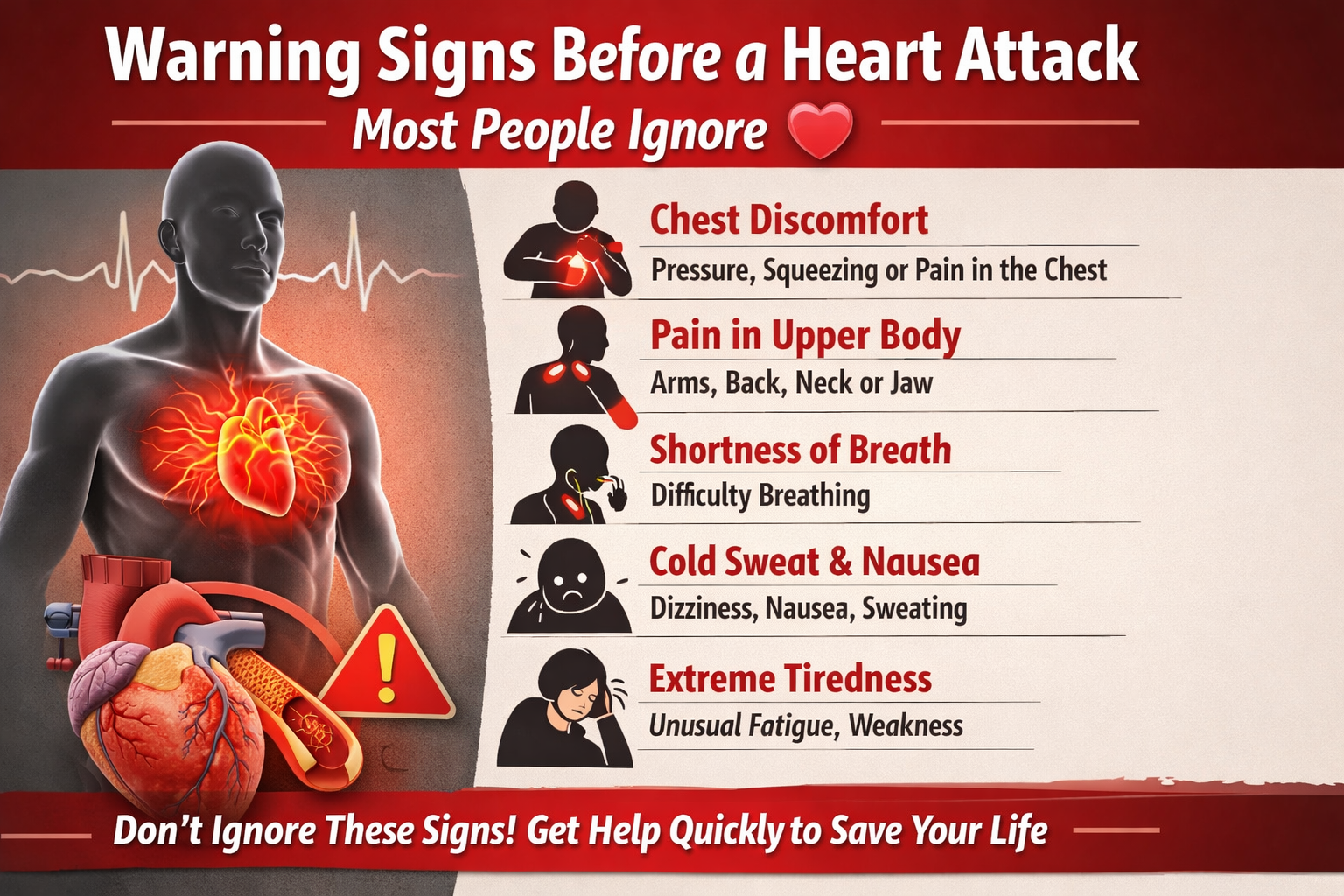
Heart attacks do not always come suddenly. In many cases, the body gives clear warning signs days, weeks, or even hours before a major cardiac event. Sadly, most people ignore these signals, thinking they are minor issues like gas, stress, or tiredness. Doctors say early attention can save lives.
Why Heart Attack Awareness Is Important
Heart disease is one of the leading causes of death in India and worldwide. Busy lifestyles, stress, unhealthy food, and lack of exercise have increased the risk, even among young people. Knowing the early signs of a heart attack can help people act fast and avoid serious damage.
Chest Discomfort: The Most Common Warning Sign
Chest pain or discomfort is the most common sign of a heart attack. It usually feels like pressure, tightness, squeezing, or heaviness in the centre of the chest.
This discomfort may last for a few minutes or come and go. Many people mistake it for acidity or muscle pain, which leads to dangerous delays.
Pain in Other Upper Body Parts
Heart attack pain is not limited to the chest. Many people experience discomfort in other areas, including:
- One or both arms
- Back
- Neck
- Jaw
- Upper stomach
This pain may spread slowly and feel dull or aching instead of sharp.
Shortness of Breath Should Not Be Ignored
Feeling breathless without heavy activity is a serious warning sign. Shortness of breath can happen with chest pain or even without it. Some people feel they cannot take a full breath, even while resting.
Doctors say this symptom often appears before a major heart attack.
Other Silent Signs Your Body Gives
Apart from pain, the body may show other signals such as:
- Cold sweating without reason
- Nausea or vomiting
- Feeling dizzy or lightheaded
- Fast or irregular heartbeat
- Extreme tiredness
These symptoms are often ignored, especially when they appear alone.
Heart Attack Symptoms Can Be Different in Women
Women may experience different or less obvious symptoms compared to men. While chest pain is common, women often report:
- Anxiety or uneasiness
- Unusual weakness
- Back, shoulder, or arm pain
- Upset stomach
- Nausea and vomiting
Because these signs are subtle, women are more likely to delay medical help.
Why You Should Never Delay Medical Help
Time is the most important factor during a heart attack. Quick treatment can prevent severe heart damage and save life. Calling emergency services ensures faster care and early treatment even before reaching the hospital.
Reaching the hospital by ambulance often leads to quicker diagnosis and better outcomes.
Doctors Advise: Trust Your Body Signals
Health experts strongly advise people to listen to their body. If something feels wrong, it is better to get checked instead of waiting. Even if it turns out to be a false alarm, it is safer than risking a life-threatening emergency.
Conclusion
A heart attack rarely comes without warning. Chest discomfort, breathing trouble, unexplained tiredness, and body pain are signals your heart may be in danger. Ignoring these signs can be fatal. Awareness, quick action, and timely medical help can make the difference between life and death. Listening to your body could save your life or someone you love.
FAQs
What is the earliest sign of a heart attack?
Chest discomfort or pressure is the most common early sign, but symptoms can vary.
Can a heart attack happen without chest pain?
Yes, especially in women and elderly people, heart attacks can occur without chest pain.
How long do warning signs appear before a heart attack?
Warning signs can appear hours, days, or even weeks before a major heart attack.
Should I go to the hospital even if symptoms are mild?
Yes. Mild symptoms should never be ignored. Early medical help is always better.
Are young people also at risk of heart attacks?
Yes. Due to stress, lifestyle issues, and poor diet, heart attacks are increasing among young adults