
A surprising story from social media has shocked many people and raised new questions about how AI is being used today. A viral post on X (formerly Twitter) claimed that an Instamart customer used an AI-edited image to get a refund for a box of eggs. The incident has started a big debate about trust, technology, and the future of online refunds.
Table of Contents
ToggleHow The Incident Started
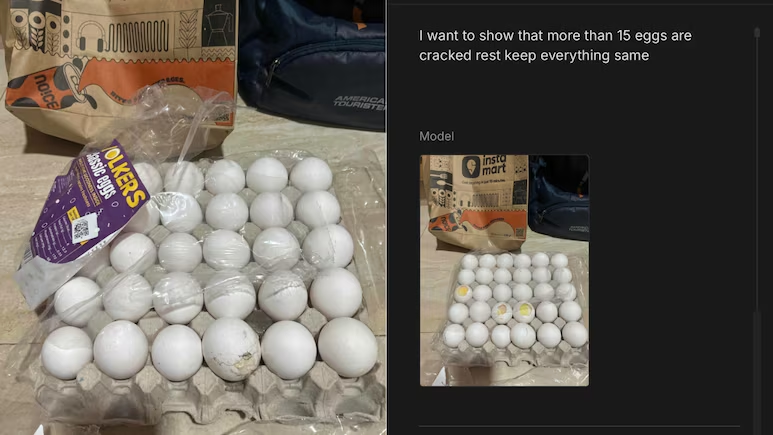
According to the viral post, the customer ordered a tray of eggs from Instamart. When the order arrived, only one egg was cracked. Instead of reporting the real issue, the customer allegedly decided to go a step further.
The person reportedly used an AI tool to edit the picture and make it look like many eggs were broken. The edited image showed more than 20 cracked eggs, making it seem like the order was completely damaged.
AI Tool Used To ‘Add More Cracks’
The viral post claimed that the customer typed a simple instruction into an AI tool — something like “apply more cracks.” Within seconds, the AI turned the original photo into a realistic image with multiple cracked eggs.
The edited picture looked so real that it was difficult to identify it as fake. This shocked many viewers online, proving how advanced and convincing AI-generated images have become.
Instamart Allegedly Approved Refund
The post also showed a screenshot of a chat with Instamart’s customer support. The customer reportedly sent the AI-edited image as proof of damage. Based on the picture, support allegedly approved a refund of ₹245.
This part of the story created huge discussion online, with people wondering how easily AI can fool verification systems.
Why This Story Is Creating A Big Debate
Social media users pointed out that refund systems were built in a time when photos were assumed to be honest. Now, AI tools can create fake images in seconds, making it difficult for companies to verify what’s real.
Many people believe that if even a small number of customers start doing this, businesses could face huge losses.
Some users also reminded that AI is not the real problem — the issue is misuse and outdated verification methods.
Technologies vs Trust
This incident highlights a bigger concern: as AI becomes more powerful, trust in digital proof may become weaker. Companies may soon need new systems, like AI-detection tools or extra verification steps, to prevent fraud.
It also raises ethical questions — if technology gives us power, how responsibly are we using it?
Similar Cases Are Emerging
Recently, another viral case involved a customer allegedly using an AI-generated image of a damaged cake to claim a refund from a bakery. The bakery later exposed the image as fake.
These incidents show that AI misuse is becoming more common, and businesses may need to prepare for a new kind of challenge.
Conclusion
The viral post about the Instamart egg refund shows how the world is entering a new era where AI can change not just images, but trust itself. While AI is a powerful tool for creativity and innovation, misuse can lead to financial loss and ethical concerns. Companies may soon need smarter verification systems, and users must understand that technology should be used responsibly. The story is a reminder that honesty still matters—even in a digital world.
FAQs
What was the viral claim?
It claimed that a person used an AI-edited image of cracked eggs to get a refund from Instamart.
Was the photo real or edited?
According to the post, the image was edited using AI to make it look like more eggs were broken.
Did Instamart confirm the incident?
There is no official confirmation from Instamart. The story is based on a viral social media post.
Why are people concerned?
Because AI-generated images can look extremely real, making fraud easier.
What can companies do next?
Businesses may need AI-detection tools or stronger verification systems to prevent misuse.