
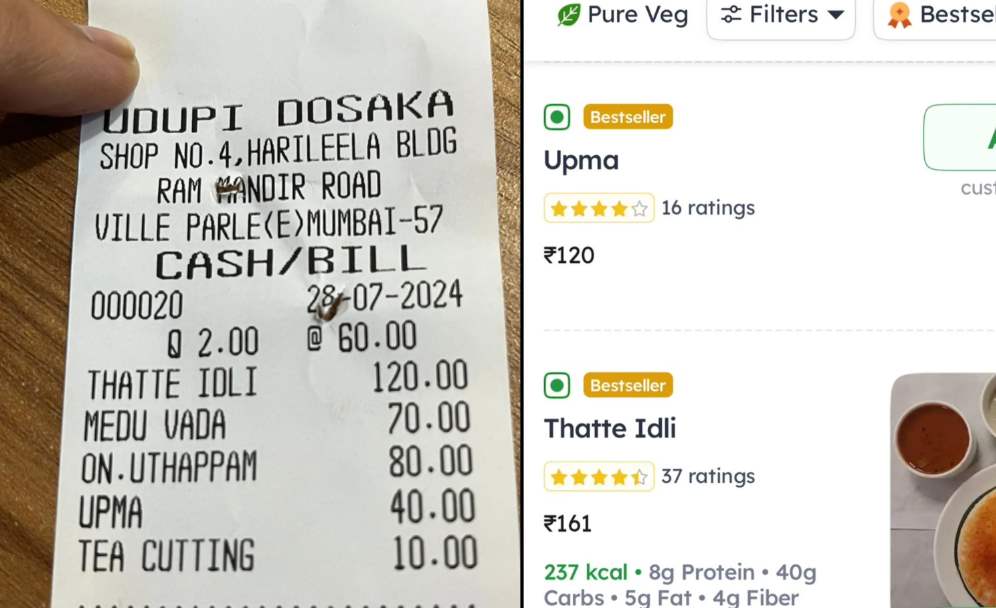
A man from Mumbai recently created a huge discussion online after he shared surprising price differences between food ordered directly at a restaurant and the same items listed on Zomato. His post quickly went viral, raising questions about food delivery app pricing, convenience fees, and customer awareness.
How Digital Food Ordering Changed Our Daily Life
The way people buy things has changed a lot in the last decade. Earlier, everyone used to shop from markets or small roadside shops and paid with cash.
But after e-commerce platforms like Amazon, Flipkart and Myntra entered the market, people started depending more on online purchases.
.@zomato
There is a restaurant called Udupi2Mumbai in vile parle
Below is my bill and screenshot of zomato menu cardDifference:
Upma in bill Rs40; in zomato Rs120
Thatte idli in bill Rs60; in zomato Rs161 pic.twitter.com/0LJZBYfwSi— Abhishek Kothari 🇮🇳 (@kothariabhishek) July 28, 2024
The same change has happened with food. Busy schedules, long travel times, and lack of time to cook pushed people towards apps like Swiggy and Zomato. With just a few taps, customers can explore menus, select dishes, and get food delivered to their doorstep.
Had I ordered from .@zomato, I would have to pay Rs740 (without the tea cost) pic.twitter.com/YijZx9dYEF
— Abhishek Kothari 🇮🇳 (@kothariabhishek) July 28, 2024
The Viral Post Showing the Price Difference
The Mumbai man visited a restaurant named Udupi 2 Mumbai and noticed a huge difference between the restaurant’s original prices and the prices shown on Zomato.
He shared a screenshot comparison:
- Upma price at restaurant: ₹40
- Upma price on Zomato: ₹120
- Thatte Idli price at restaurant: ₹60
- Thatte Idli price on Zomato: ₹161
These differences shocked many social media users. People started debating whether the convenience was worth paying so much extra.
Why Are App Prices Higher? An Explanation
Many customers assume that delivery apps inflate prices. But the truth is slightly different.
Restaurants Often Increase Prices on Apps
Restaurant partners usually list their own menu prices on delivery platforms. Many increase the rates because:
- They pay commissions to the delivery platform
- They spend extra on packaging
- They adjust for discounts they offer online
- They want to earn profit even after delivery charges
Customers Pay for Convenience
The user doesn’t have to travel, call the restaurant, stand in queues, or wait for service.
In simple words: you pay extra for the comfort of eating food without leaving your home.
One social media user responded perfectly, saying that the delivery boy rides through traffic and rain to bring your food, saving you time and effort.
What Did Zomato Say About the Viral Post?
Zomato reacted to the complaint and clarified that restaurants control their own pricing on the app.
They also said they would share the feedback with the concerned restaurant.
This response shows that the platform takes customer concerns seriously but also wants users to understand how the pricing system actually works.
Is the Price Difference Justified?
Opinions are mixed.
Arguments Supporting Higher Prices
- Convenience and comfort
- Packaging and delivery cost
- Quick service
- Doorstep delivery during bad weather
Arguments Against Higher Prices
- Customers feel cheated when prices triple
- Some dishes have unreasonable markups
- Online menu prices are not always transparent
In the end, it depends on what the customer prefers—save money by visiting the restaurant or pay extra for comfort at home.
Conclusion
The Mumbai man’s post has once again opened a big conversation about food delivery pricing in India. While the higher online prices may feel unfair, they often come from the restaurant side rather than the platform itself. Delivery apps offer convenience and speed, but it comes at a cost.
Customers can decide which option suits them best: saving money at the restaurant or enjoying the comfort of home delivery. Awareness and wise choice are the keys.
FAQs
Why is food more expensive on Zomato or Swiggy?
Restaurants usually increase prices to cover commissions, packaging charges, and delivery-related costs.
Can Zomato reduce restaurant prices on its own?
No, Zomato does not control menu pricing. Restaurants set their own prices on the app.
Is it cheaper to eat at a restaurant than ordering online?
Yes, in many cases the restaurant bill is lower compared to online menu prices.
Does convenience justify the higher cost?
It depends on the customer. Some people prefer comfort and time-saving, while others prefer saving money.
How can I avoid high prices on food delivery apps?
Compare prices before ordering, check for offers, or choose self-pickup options if available.