
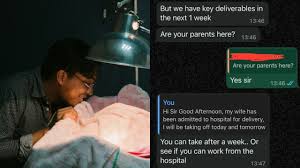
A shocking incident from a corporate office in India has once again highlighted the growing debate on toxic work culture. A Reddit user recently shared that his manager refused to grant him leave during his wife’s delivery and instead told him to “work from the hospital.” The post quickly went viral and triggered a strong reaction online.
Table of Contents
ToggleEmployee Says Manager Ignored His Emergency Situation
According to the Reddit post, the employee’s wife was admitted for delivery. He informed his manager and requested just two days of leave. Instead of understanding the situation, the manager reportedly asked him whether he could “take leave after a week” or simply bring his laptop and work from the hospital.
The employee explained multiple times that he needed to be next to his wife, support her during delivery, and manage hospital-related formalities. But the manager kept insisting he could log in and finish his tasks from the hospital room.
Fear of Losing Job Made the Employee Feel Helpless
In his post, the employee said he felt mentally stressed and helpless. With a child on the way and increasing financial responsibilities, he feared that arguing with his manager might cost him his job. He even mentioned that the pressure made it difficult to focus on his family during such an important moment.
He later shared that the manager advised him to send an email to HR, but the overall conversation left him emotionally drained.
How Social Media Reacted To The Incident
Once the post appeared on Reddit, it quickly gathered massive attention. Many users shared similar experiences where they were denied leave during medical emergencies, family functions, and even funerals.
Some people said this kind of behaviour reflects a deeper problem in Indian corporate culture—where employees are expected to put work above their personal lives.
Others argued that the lack of proper leave policies and the fear of job loss forces people to silently tolerate such treatment.
Why Such Incidents Keep Happening: A Larger Pattern
Rigid Hierarchy
Many Indian workplaces still follow strict top-down structures where questioning a manager is seen as disrespectful.
Lack of Empathy
Employees often feel that their personal situations are not valued unless they directly affect company targets.
Job Insecurity
Because of competition and limited job opportunities in some sectors, people avoid speaking up even when they face injustice.
Work-Life Imbalance
The shift to remote work after COVID blurred boundaries, making it easier for employers to expect people to “always stay available.”
Why Companies Must Change Their Approach
This incident shows why organisations must build more humane policies. Employees are not machines—they go through family emergencies, health issues, and emotional moments. When companies show compassion, employees naturally remain loyal, motivated, and productive.
Leaders who understand this difference will build stronger teams and healthier workplaces.
Conclusion
The viral post about a manager denying leave to an employee during his wife’s delivery has once again opened a wider conversation about toxic work culture in India. While many companies talk about work-life balance, incidents like these prove that the ground reality is still far from ideal. A supportive workplace is not just about providing leave—it is about respecting employees’ lives outside the office. As more young professionals demand empathy and fairness, it is time for organisations to rethink their approach and place humanity above deadlines.
FAQs
What exactly happened in this incident?
A Reddit user claimed that his manager refused to give him leave during his wife’s delivery and suggested he work from the hospital instead.
Why did the incident go viral?
Many people related to the situation and shared similar experiences, which made the discussion trend on social media.
Is this a common issue in Indian workplaces?
Yes, many employees complain about rigid managers, lack of empathy, and pressure to prioritise work over family situations.
Can HR departments help in such cases?
HR can help, but employees often hesitate to escalate issues because they fear losing their job or facing backlash.
How can companies improve work culture?
By creating clear leave policies, training managers in empathetic leadership, and promoting a healthier work-life balance.