
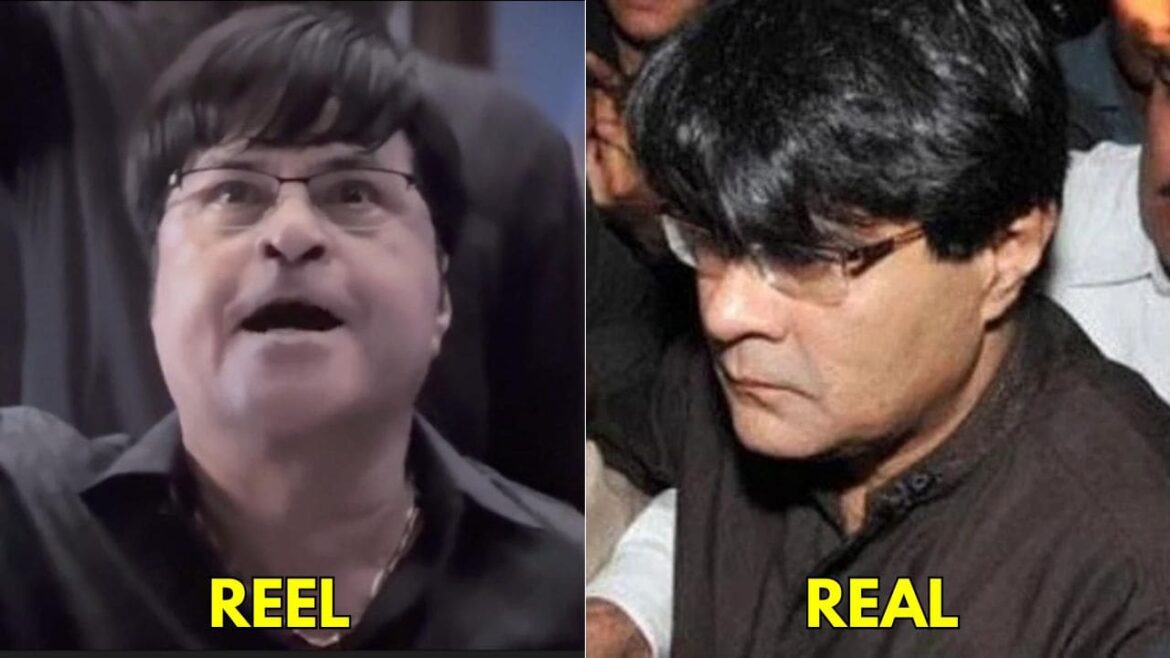
The movie Dhurandhar has created huge buzz, not just for its action and performances, but also for the real-life inspiration behind some of its characters. One such name that caught public attention is the Khanani Brothers, shown as powerful shadow financiers in the film. Many viewers are now asking: Who were they really, and what did they do?
This article explains the real story behind the Khanani Brothers in simple terms, separating cinema drama from real-world facts.
Why the Khanani Brothers Became Talk of the Town Again
After Dhurandhar released, people started searching about the financial networks shown in the movie. Unlike typical terror stories focused on weapons and attacks, this film highlights something more dangerous — money power.
The Khanani Brothers are shown as men who stayed behind the scenes but allegedly controlled massive illegal money flow. This brought back memories of one of South Asia’s most talked-about underground money networks.
Who Were the Real Khanani Brothers?
The real Khanani Brothers were Javed Khanani and Altaf Khanani, based in Karachi, Pakistan. They were linked to a company called Khanani & Kalia International (KKI).
According to multiple international investigations, this company was allegedly used to run one of the largest hawala and money-laundering networks in the world. Money was quietly moved across countries without banks, records, or official approval.
Their network reportedly spread across:
- Pakistan
- India
- Middle East
- Europe
- United States
- Australia
What Was Their Role in Illegal Money Movement?
The Khanani Brothers were not accused of carrying weapons or planning attacks. Instead, they were alleged to be financial enablers.
Investigators claimed their network:
- Moved illegal money through hawala routes
- Helped criminals hide funds
- Was linked to terror financing
- Circulated fake currency
- Avoided banking systems completely
This is why they were often called “shadow bankers”, as their operations stayed invisible for years.
Khanani & Kalia International: A Legal Cover?
KKI started in the 1980s as a foreign exchange and remittance business. On paper, it looked legal. But authorities later alleged that behind this front, illegal money worth billions of dollars was moved every year.
During Pakistan’s Forex Scam of 2008, KKI came under strict scanner. Offices were raided, accounts frozen, and licenses cancelled. The case exposed major loopholes in Pakistan’s financial monitoring system.
Javed Khanani: The Silent Operator
Javed Khanani was believed to manage the internal workings of the network. He stayed away from public attention and rarely appeared in media.
In late 2016, he died in Karachi. His death happened shortly after India’s demonetisation, which badly hit hawala networks. Many questions were raised, but no clear answers came out. With his death, all legal cases against him ended.
Altaf Khanani: Arrest and Conviction
Altaf Khanani’s story had a very different ending.
In 2016, he was arrested and later extradited to the United States. There, he pleaded guilty to money laundering charges. US authorities said his network served drug gangs, smugglers, and terror-linked groups.
He was sentenced to prison, fined heavily, and released in 2020. His organisation was officially declared a transnational criminal network.
How India’s Demonetisation Affected Their Network
India’s demonetisation in November 2016 badly disrupted illegal cash systems. Hawala routes collapsed overnight. Fake currency lost value. Underground money trails broke.
Experts believe this move dealt a serious blow to networks like the one allegedly run by the Khanani Brothers, already weakened by international pressure.
How Dhurandhar Shows This Story
The film Dhurandhar simplifies this complex story for cinema. It does not name everything directly but hints at how terror and crime survive on financial support.
By showing money movers instead of gunmen, the film highlights a harsh truth — wars and terror often run on hidden money pipelines.
Conclusion
The real Khanani Brothers were not movie villains in uniforms but alleged masterminds of financial systems that stayed hidden for decades. Their story reminds us that behind every big crime network, there is often a silent money engine.
Dhurandhar has brought this forgotten chapter back into public discussion, making people think beyond surface-level crime stories.
FAQs
Who were the Khanani Brothers?
They were Javed Khanani and Altaf Khanani, accused of running a massive international money-laundering network.
What was Khanani & Kalia International?
It was a foreign exchange and remittance company alleged to be used for illegal hawala transactions.
Was Altaf Khanani punished?
Yes, he was arrested, extradited to the US, convicted, and served prison time.
Did Dhurandhar show a real story?
The film is inspired by real events but uses cinematic storytelling.
Why is this story important today?
It shows how financial crime quietly supports larger criminal and terror networks.