
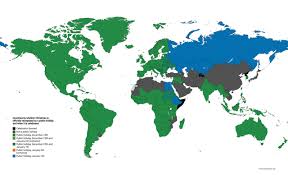
Christmas is one of the most popular festivals in the world. Every year on December 25, cities glow with lights, markets offer big discounts, and families come together to celebrate. Over time, Christmas has become more than just a religious festival. Even in countries where Christians are a small minority, Christmas decorations, Santa Claus figures, and year-end sales are very common.
In India too, Christmas is celebrated not only by Christians but also enjoyed as a festive season by people of all religions. However, this global picture is not the same everywhere. There are a few countries where Christmas celebrations are restricted or completely banned due to political, religious, or security reasons.
Here is a detailed look at such countries and the reasons behind these restrictions.
North Korea: Christmas Replaced By State Loyalty
In North Korea, Christmas is not allowed in any form. The country follows strict government ideology where loyalty to the ruling family comes above everything else, including religion.
Religious beliefs are seen as a threat to the authority of the state. Christianity, in particular, is viewed as a foreign influence. December 25 is instead linked to the birth anniversary of Kim Jong-suk, who is related to the ruling Kim family.
On these days, citizens are encouraged to take part in government-organised events, cultural programs, and visits to statues. Any private or public Christmas celebration can lead to serious punishment.
Saudi Arabia: No Public Space For Christmas
Saudi Arabia is the birthplace of Islam and follows a strict interpretation of Islamic law. Because of this, non-Islamic religious celebrations are not allowed in public.
Christmas decorations, trees, or music are not seen on the streets. Shops do not promote Christmas sales, and public gatherings for Christmas are banned.
However, many foreign Christians living in Saudi Arabia do celebrate Christmas quietly inside their homes or within embassy premises. These celebrations remain private and low-key to avoid legal trouble.
Brunei: Celebrations Limited To Private Spaces
Brunei is a small but wealthy Southeast Asian country that follows Sharia law. The government has placed strict rules on public religious expressions that are not Islamic.
Public display of Christmas symbols such as Santa hats, Christmas trees, or festive lights is not allowed. Authorities believe such displays may influence Muslims and weaken religious values.
Christians in Brunei are allowed to celebrate Christmas only inside churches or homes, away from public view. Streets and markets remain normal during December without festive signs.
Somalia: Christmas Seen As A Security Risk
Somalia is a Muslim-majority country where Islamic law strongly influences daily life. Christmas celebrations are officially banned by the government.
Authorities have stated that Christmas goes against the country’s culture and religious beliefs. The situation becomes even more dangerous due to extremist groups like Al-Shabaab, who oppose anything linked to the West or Christianity.
Because of security threats, even private celebrations can be risky. For the very small Christian population in Somalia, December 25 passes like any other day, without celebration or public acknowledgment.
Tajikistan: Cultural Control Over Festivities
Tajikistan is different from other countries on this list. Here, Christmas is restricted not mainly due to religion but because of government control over culture.
The government has banned Christmas trees, Santa Claus figures, and gift exchanges in schools and public institutions. These traditions are seen as foreign and not aligned with national culture.
Churches are allowed to hold prayer services quietly, but public celebrations are discouraged. The aim is to protect local traditions and limit outside cultural influence.
Why Some Countries Ban Christmas
There are different reasons behind these bans. In some countries, religion plays the biggest role, where Islamic law does not allow public celebration of non-Islamic festivals. In others, political ideology and fear of foreign influence are the main concerns.
Security issues also matter. In conflict-prone nations, Christmas can become a target for extremist attacks, making celebrations unsafe.
Global Contrast: Where Christmas Is Widely Celebrated
While these bans exist, it is important to note that most countries across Europe, the Americas, Africa, and Asia openly celebrate Christmas. In many places, it is a public holiday enjoyed by people of all religions.
Even in non-Christian countries like Japan, South Korea, and India, Christmas has become a cultural and commercial festival.
Conclusion
Christmas is often seen as a symbol of joy, unity, and togetherness. But the reality is that not everyone across the world can celebrate it freely. Political systems, religious laws, and security concerns shape how festivals are observed in different countries.
These restrictions highlight how cultural freedom varies globally. While some nations welcome diverse celebrations, others choose to strictly control public traditions. Understanding these differences helps us see the world beyond festive lights and greeting cards.
FAQs
Is Christmas completely banned in North Korea?
Yes, Christmas is completely banned in North Korea. Religious celebrations are not allowed, and December 25 is linked to state events instead.
Can Christians celebrate Christmas in Saudi Arabia?
Christians can celebrate Christmas privately at home, but public celebrations or decorations are not permitted.
Why is Christmas restricted in Brunei?
Brunei restricts public Christmas celebrations to protect Islamic values under Sharia law.
Is it dangerous to celebrate Christmas in Somalia?
Yes, due to government bans and threats from extremist groups, celebrating Christmas in Somalia can be risky.
Does Tajikistan ban Christmas because of religion?
No, the restrictions in Tajikistan are mainly cultural and political, aimed at reducing foreign influence.
Are there other countries with similar restrictions?
Yes, some other nations have informal or local restrictions, but complete bans are rare