
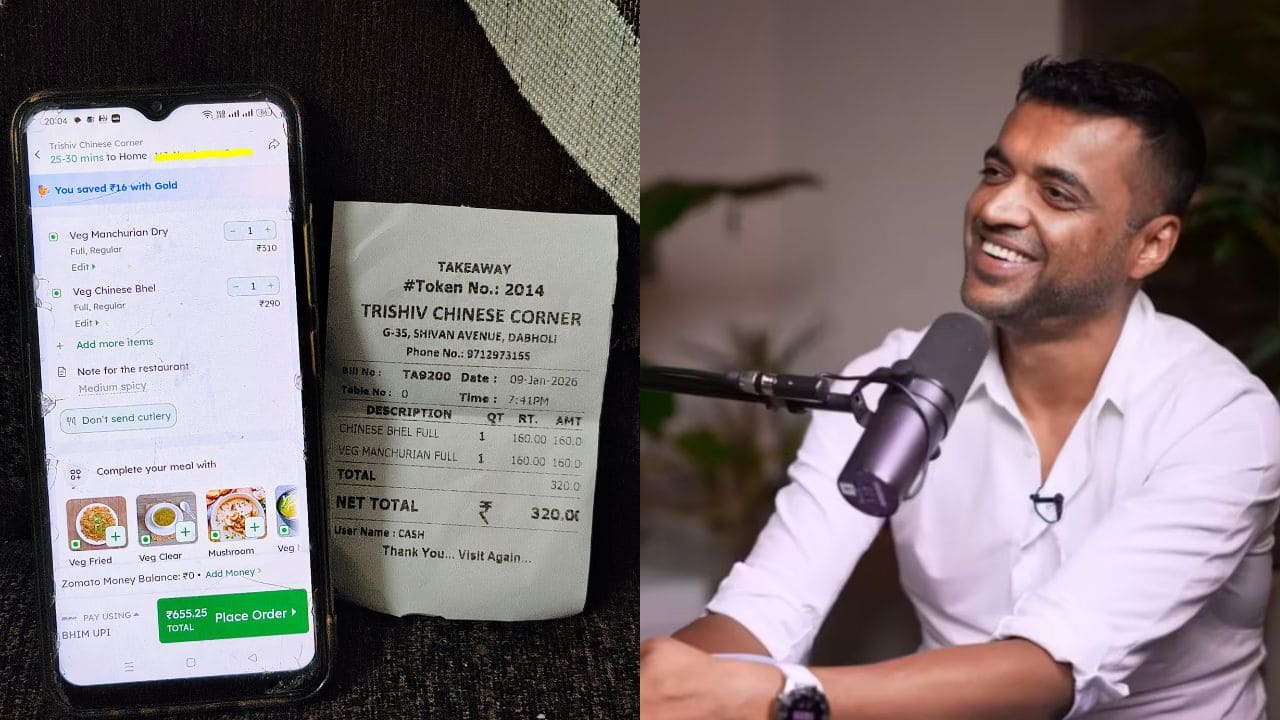
A recent viral post on social media once again brought Zomato into the spotlight. A customer highlighted a huge price gap between food ordered online and the same food bought directly from the restaurant. While many users blamed the platform, a restaurant owner came forward to explain why online and in-store prices can never be the same.
His explanation added a new layer to the debate and helped people understand the hidden costs behind food delivery apps.
What Started The Zomato Price Difference Debate
The discussion started after a woman shared screenshots showing a major difference in food prices. According to her post, the same items cost more than double on Zomato compared to takeaway from the restaurant.
The post went viral within hours. Many users shared similar experiences and questioned why online food is so expensive. Some accused Zomato of overcharging customers, while others blamed restaurants.
Soon, Zomato responded, but the debate did not stop there.
Restaurant Owner Shares The Other Side Of The Story
After the post gained attention, a restaurant owner joined the conversation on X (formerly Twitter). He claimed to run a food outlet listed on both Zomato and Swiggy and decided to explain the real economics behind online pricing.
According to him, keeping the same price for online and in-store orders is practically impossible for restaurants.
Commissions And Taxes Eat Into Restaurant Earnings
The owner explained that food delivery platforms charge a high commission on every order. This commission can go up to 20–25 percent. On top of that, GST is applied on the commission amount.
This means that a large portion of the bill does not go to the restaurant at all. Even before paying staff salaries, rent, and raw material costs, a big share is already deducted.
Discounts Come From Restaurant’s Pocket
Another important point raised was discounts. Many customers believe Zomato gives discounts, but in reality, most offers are paid for by the restaurant.
When a customer gets a discount, the restaurant bears that loss. Over time, this adds to the financial pressure, especially for small and medium food businesses.
Delivery Fees And Ads Increase The Burden
The restaurant owner also revealed that delivery charges are not always covered by the platform. In many cases, restaurants end up sharing or absorbing part of the cost.
On top of this, restaurants must pay for in-app advertisements to remain visible. Without ads, orders drop sharply. These weekly ad spends further reduce profits.
Why Online Convenience Comes At A Higher Price
The owner clearly stated that online orders offer convenience. Customers get food delivered to their doorstep without stepping out. This convenience has a cost.
According to him, if customers want cheaper food, takeaway is the best option. Online delivery includes platform charges, logistics, technology, and marketing costs, which naturally increase the final price.
Public Reaction Remains Divided
After the explanation went viral, netizens were divided. Some users appreciated the honesty and said they now understand why prices differ. Others still felt platforms should be more transparent and show a clear price breakup.
The discussion highlighted that the issue is not black and white. Both customers and restaurants are affected in different ways.
Conclusion
The viral Zomato price difference post opened an important conversation about online food delivery economics. While customers feel cheated by higher prices, restaurant owners struggle with commissions, taxes, ads, and operational costs.
This incident shows that food delivery convenience comes at a price. Instead of blaming one side, better transparency from platforms and informed choices by customers can help create a fair balance for everyone.
FAQs
Why is food more expensive on Zomato than in restaurants?
Online prices are higher due to platform commissions, taxes, delivery costs, discounts, and advertising expenses paid by restaurants.
Does Zomato set the food prices?
Restaurants usually set the prices themselves, but they increase rates to cover platform-related costs.
Are discounts really free for customers?
Most discounts are funded by restaurants, not the platform, which reduces restaurant profits.
How can customers save money on food orders?
Choosing takeaway instead of delivery usually offers lower prices and avoids extra charges.
Is this issue common across all food delivery apps?
Yes, similar pricing differences exist on most food delivery platforms due to similar business models.