
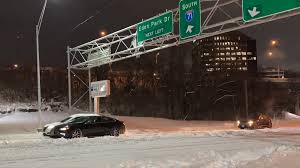
In Ohio, most areas like Hamilton, Butler, Warren, and Clermont are currently under a Level 2 emergency. This means the situation is quite bad. However, Highland County has gone a step further and declared a Level 3 emergency, which is the highest and most dangerous level.
If you are in these areas, you will see that the roads are not just white, but they are also very slippery. Driving a normal car in these conditions is like trying to walk on a floor covered in oil.
Kentucky and Indiana: High Danger Zones
The situation across the river in Kentucky is even more intense. Many counties including Grant, Mason, Pendleton, Owen, Bracken, and Robertson are all at Level 3. This is almost a total lockdown for regular traffic.
In Indiana, they use a “Color Code” system. Counties like Dearborn, Ripley, and Franklin are under a Red Travel Advisory. In the American system, “Red” means the same as “Level 3″—the roads are officially closed to everyone except emergency workers.
Decoding the Levels: What Does Your Color Code Mean?
If you are confused about what “Level 2” or “Red” means for your daily life, here is a simple breakdown:
-
Level 1 (Yellow): This is a “Warning.” The roads are slippery. You can drive, but you must be very careful. It is like driving in light rain.
-
Level 2 (Orange): This is a “Danger” sign. Only drive if it is absolutely necessary (like going to a hospital or a critical job). The snow is blowing and drifting, making it hard to see the road.
-
Level 3 (Red): This is a “Lockdown.” The roads are closed to the public. Unless it is a life-and-death emergency, you should stay at home.
The Threat of Arrest: Why You Must Stay Home During Level 3
One very important thing to remember is the legal side. During a Level 3 or Red alert, the police have the power to arrest you if you are driving without a valid reason. They don’t want to put people in jail, but they want to stop “joyriders” who go out just to see the snow and end up getting stuck.
When a regular car gets stuck in the middle of a road, it blocks the path for ambulances and snowplows. By staying home, you are actually helping the city get back to normal faster.
Our Opinion: Safety First Over Work
In our view, no job is more important than your life. If your county is under Level 2 or Level 3, you should call your boss immediately. In most cases, companies cannot force you to come to work if the Sheriff has declared the roads “closed.”
It is better to stay indoors with a hot cup of tea or coffee and wait for the “Snow Warriors” to clear the paths. Taking a risk on an icy road could lead to a permanent loss for a temporary job requirement.
Conclusion
The Cincinnati area is dealing with a very high-risk weather event. With many counties at Level 3 and Red status, the message is simple: Stay Home. The government is doing its best to manage the crisis, but they need the citizens to cooperate. Keep an eye on the local news, keep your phone charged, and do not step out unless it is a real emergency.
FAQs
What happens if I drive during a Level 3 emergency?
If you are driving for a non-essential reason, you can be stopped by the police, given a fine, or even arrested. It is considered a violation of a public safety order.
Does Level 2 mean I can go to the grocery store?
Level 2 says “only if absolutely necessary.” If you have food at home, it is better to stay inside. If you must go, drive very slowly and keep a long distance from the car in front of you.
Who decides these snow levels?
In Ohio and Kentucky, the local County Sheriff has the power to declare these levels based on reports from the road crews and weather experts.
Is a ‘Red Advisory’ the same as a ‘Level 3’?
Yes. Different states use different names. Indiana uses “Red Advisory,” while Ohio uses “Level 3.” Both mean that the roads are closed to the general public.
When will these levels be lowered?
The levels are only lowered when the snow stops falling and the plows have cleared at least one lane on the main roads. You should check the official Sheriff’s website for real-time updates.
Would you like me to find the contact numbers for the Sheriff’s offices in these counties so you can check the status of a specific road?