
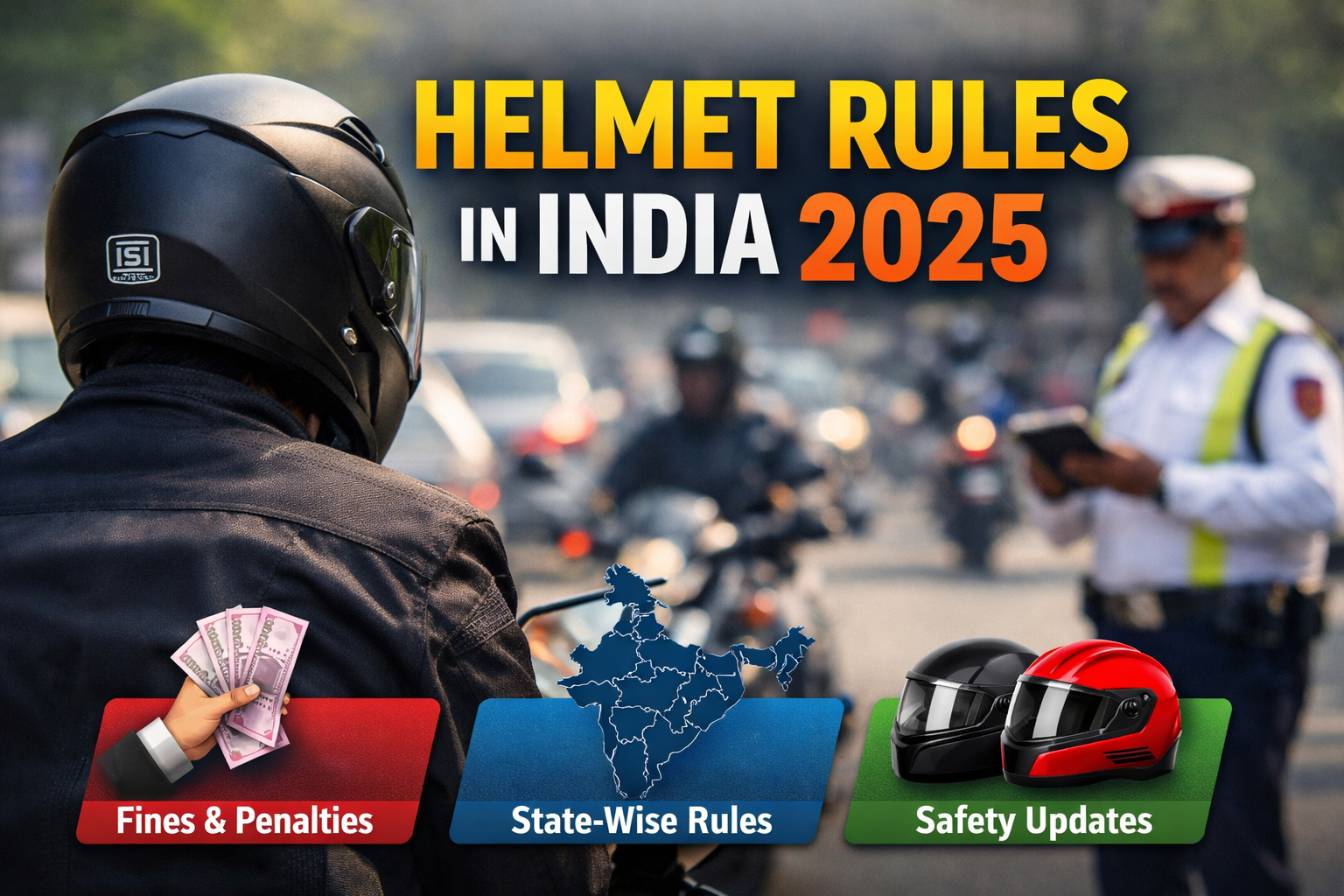
India has more two-wheelers on the road than almost any other country. With this reality comes higher risk — and that’s why helmet laws exist. In 2025, enforcement is stricter, fines are higher, and new rules are coming that every rider and pillion passenger must understand.
This guide explains India’s current helmet laws, penalties, upcoming changes, state-wise differences, and how to stay compliant and safe.
Why Helmet Laws Matter in India
Road accidents involving two-wheelers account for a large portion of serious injuries and fatalities in India. A certified helmet reduces the risk of head injury by more than half in a crash. For this reason, the government has strengthened helmet laws and increased penalties to improve compliance and save lives.
Helmet Law in India: What the Motor Vehicles Act Says
Mandatory Helmet Use
Section 129 of the Motor Vehicles Act makes helmet use compulsory for:
- All two-wheeler riders
- All pillion riders aged 4 years and above
The helmet must be:
- Properly worn
- Firmly fastened under the chin
- Certified under Indian safety standards
Riding with a loose or unbuckled helmet is treated the same as not wearing one.
Legal Helmet Standard (ISI / BIS Certification)
Only helmets certified by the Bureau of Indian Standards (BIS) are legal for road use in India.
A legal helmet must:
- Carry an embossed ISI mark
- Follow the IS 4151 safety standard
- Have impact-absorbing inner foam
- Use a strong retention strap
- Fall within approved thickness and weight limits
Helmets without proper certification — including many imported or decorative helmets — are illegal and may be confiscated.
Religious Exemption
Sikh men wearing turbans are legally exempt from helmet requirements.
This exemption applies only when the turban is worn and does not extend to other riders or pillion passengers.
Helmet Fine in India (2025)
The 2019 amendment to the Motor Vehicles Act significantly increased penalties.
National Penalty
- ₹1,000 fine for riding without a helmet
- Possible driving licence suspension up to 3 months for repeat violations
State-Wise Helmet Fines in India
States can modify fines based on local policy.
| State | Penalty Policy |
|---|---|
| Assam, Bihar, Haryana, Tripura | ₹1,000 as per central law |
| West Bengal, Chhattisgarh, Telangana, Punjab, MP | ₹1,000 — no reduction |
| Maharashtra | ₹1,000 + possible 3-month licence suspension |
| Uttar Pradesh | ₹600 |
| Gujarat | ₹500 |
| Uttarakhand | ₹500 |
| Kerala | ₹500 |
| Karnataka | Proposal under review |
| Odisha | Implementation delayed |
How Helmet Enforcement Works
Traffic authorities now use multiple enforcement methods:
- CCTV-based automated challans
- Roadside inspections
- E-challans sent to registered mobile numbers
- Court summons for unpaid violations
Major cities like Bengaluru, Mumbai, Delhi, and Hyderabad rely heavily on camera-based monitoring.
New Rule: Two Helmets with Every New Bike (From 2026)
Starting January 1, 2026, all two-wheeler manufacturers must provide:
-
Two BIS-certified helmets
- One for the rider
- One for the pillion passenger
Dealers who fail to comply may face penalties. This rule is meant to increase helmet usage among pillion riders, who are often unprotected.
How to Stay Legally Compliant
Follow these steps to avoid fines and ensure safety:
- Buy only BIS/ISI-certified helmets
- Check for embossed ISI marking and licence number
- Always fasten the chin strap
- Keep your purchase invoice when possible
- Avoid cheap, decorative, or novelty helmets
- Stay updated with state-specific rules
Helmet Safety Standards Explained
A certified helmet must meet standards for:
- Impact resistance
- Shell durability
- Strap strength under tension
- Inner foam shock absorption
- Controlled weight for comfort and safety
These standards ensure the helmet performs properly during an accident.
Final Thoughts
India’s helmet laws are no longer symbolic — they are enforced seriously. With higher fines, digital monitoring, and upcoming mandatory dual-helmet rules, compliance is no longer optional.
Wearing a legal helmet is not just about avoiding a challan. It’s about protecting your life and the lives of those riding with you.
Frequently Asked Questions
Is wearing a helmet compulsory in India?
Yes. Riders and pillion passengers above 4 years must wear certified helmets.
What is the helmet fine in 2025?
₹1,000 nationally, though some states charge between ₹500 and ₹600.
Are imported helmets legal?
Only if they carry valid BIS/ISI certification.
Is a loose helmet considered valid?
No. It must be properly fastened.
Who is exempt from helmet laws?
Sikh men wearing turbans are exempt.
What happens if I ignore a helmet challan?
You may receive a court summons, higher penalties, or licence suspension.
Are two helmets compulsory when buying a new bike?
Yes, starting from 2026.