
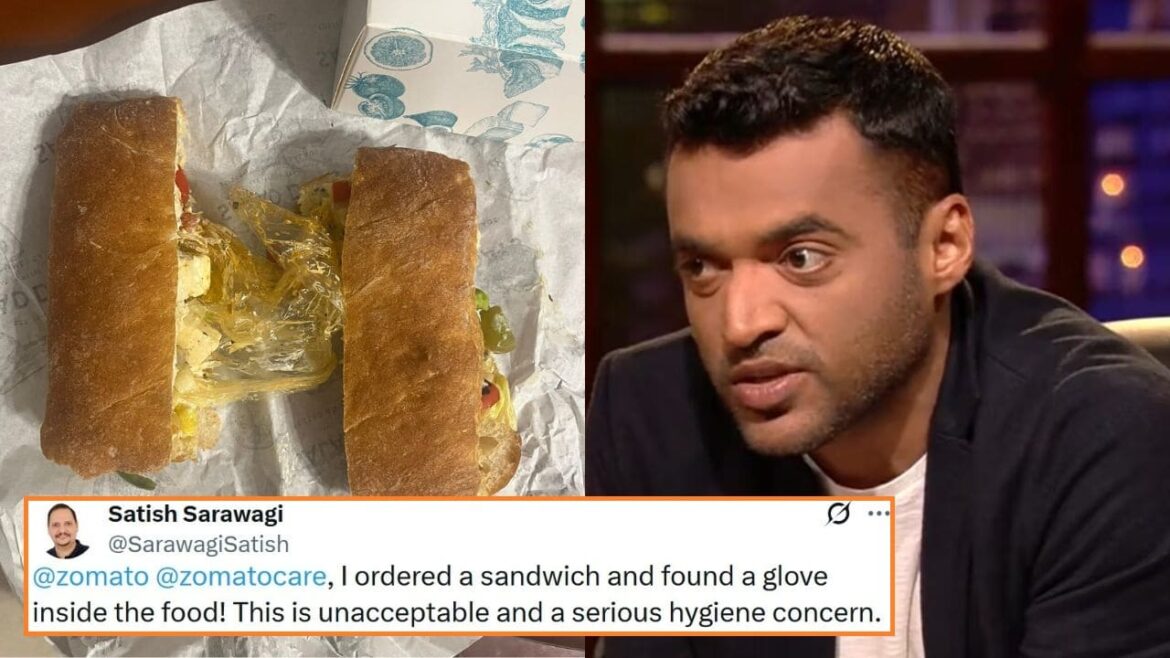
Food delivery apps like Zomato have become a huge part of our everyday life in India. From office workers to college students to families, millions of people order food online every single day because of convenience and quick service. However, when we order food online, we trust that what we receive will be safe, clean, and prepared with proper hygiene. But sometimes, mistakes happen, and those mistakes can be serious.
Recently, an incident involving Zomato has caught widespread attention on social media. A customer ordered a sandwich and was shocked to find a plastic glove inside his food. The incident sparked conversations around food safety, hygiene practices, accountability, and how delivery platforms handle complaints.
The Incident: A Shocking Discovery Inside a Sandwich
On 26 August 2025, a Zomato user named Satish Sarawagi shared his experience on X (formerly Twitter). He wrote that he ordered a sandwich through the Zomato app, but when he started eating, he noticed a plastic glove inside the sandwich. He immediately took a picture and posted it online.
His post read:
“I ordered a sandwich and found a glove inside the food! This is unacceptable and a serious hygiene concern. Please investigate and respond ASAP.”
Along with Zomato, he tagged:
- Zomato Care
- Deepinder Goyal (Founder of Zomato)
- Salad Days Co. (the restaurant)
- FSSAI India
- Major news media outlets like The Times of India and News18
His post quickly went viral, gaining reactions from people across India who were shocked and concerned.
Netizens React: Anger, Concern, and Questions
Many people online expressed frustration and anger, citing that food safety should never be compromised. Some users shared similar experiences, stating that they also faced issues such as:
- Hair in food
- Insects in meals
- Packaging contamination
- Improper food handling
Others questioned:
- How a glove could end up inside the sandwich
- Whether kitchens are following basic hygiene
- Whether restaurants are monitored regularly
This incident reignited discussions about food safety standards in cloud kitchens, fast-food chains, and local eateries that operate through delivery apps.
Zomato Responds Within 30 Minutes
To Zomato’s credit, the company responded quickly. Within 30 minutes, Zomato Care replied to the post publicly. Their response was empathetic and acknowledged how unpleasant the experience must have been.
Their reply stated:
“We’re absolutely shocked to hear about this. Please allow us some time so that we can take this up with the restaurant partner. We’ll get in touch with you to discuss this further.”
This response indicates that Zomato took the complaint seriously and intended to investigate the matter.
Quick responses like this matter because:
- They show accountability
- They help maintain trust with customers
- They assure others that concerns are heard
However, people online still demanded stronger checks, not just words.
The Restaurant Also Responds
The sandwich was prepared by Salad Days, a well-known health-focused restaurant chain. The day after the incident, they also responded publicly on X.
They stated:
“We’re taking this matter extremely seriously and have launched an investigation with our quality assurance team. The kitchen has been flagged for urgent review.”
They also asked Satish to send his contact details through direct message to resolve the issue personally.
This step shows that the restaurant did not ignore the complaint and initiated internal checks.
Why Incidents Like This Raise Bigger Concerns
Finding a plastic glove in food is not just a small mistake — it raises several important questions:
1. Hygiene Standards
How carefully are the food handlers maintaining cleanliness?
2. Quality Control
Are kitchens being supervised or inspected regularly?
3. Training of Staff
Are cooks and kitchen workers trained to follow safety protocols?
4. Accountability
Do restaurants face consequences for such mistakes?
5. Consumer Trust
Each incident harms public trust in food delivery platforms.
For many Indian households, especially working families or students living away from home, ordering food online is not a luxury, but a necessity. So safety becomes even more important.
What Can Delivery Apps Do Better?
To prevent such incidents in the future, platforms like Zomato can:
- Increase random kitchen inspections
- Use strict hygiene score ratings visible to customers
- Introduce penalties for hygiene violations
- Allow customers to rate food cleanliness separately
- Educate partner restaurants about food safety compliance
Apps have already improved speed and convenience. Now, the next step is stronger quality control.
Consumers Must Also Stay Aware
As customers, we should:
- Check food before eating
- Report any hygiene issues immediately
- Avoid ordering from restaurants with poor ratings
- Support restaurants that follow good practices
Raising awareness helps improve standards across the industry.
Final Thoughts
The incident of a man finding a plastic glove in his Zomato sandwich is not just one customer’s bad experience. It reflects a larger issue that needs continuous attention: food safety and hygiene in the fast-paced food delivery system.
While Zomato and the restaurant acted quickly and professionally, prevention matters more than response.
At a time when we rely heavily on food delivery apps, ensuring clean, safe, and trustworthy food is essential. This incident reminds both companies and consumers that hygiene is not optional — it is a basic expectation.